Cigars / Basics
How to choose your first cigar
Strength, size, wrapper and what to spend. The guides mostly agree on where to start, and many of them sell cigars.
This page contains affiliate links. If you buy through one, Cut & Smoke may earn a commission at no extra cost to you. It does not change what is written here.
Most guides give the same first answer: a mild cigar in a modest size. Many of those guides also sell cigars or earn a commission on them. This one earns a commission on the samplers below. I haven’t tried those samplers, so this is what I found when I read the advice side by side, including the places it doesn’t line up.
Cigars are for adults 21 and over. Throughout this guide, “mild” describes how a cigar tastes and how strong it is. It doesn’t mean safe, and nothing here is a health claim.
Start with strength
The Manual, a lifestyle site that earns commissions on its cigar links, says to start mild and not to jump straight to full-bodied cigars. Mike’s Cigars, which sells them, gives the same advice and names the Montecristo White, Macanudo Café and Licenciados Toro as places to begin.
Cigar Aficionado says to know a cigar’s strength before you buy it. It explains the difference through the leaves: full-bodied blends use more ligero, the dark, thick leaves from the top of the plant, while medium-bodied blends lean on milder leaves from lower down.
Starting mild doesn’t have to mean settling for less. Another Cigar Aficionado piece argues that mild cigars can be as complex and flavorful as fuller ones, and that they are more than a stepping stone.
An easygoing taste doesn’t settle the question either. Cigar Aficionado warns of what it calls the sangria effect, where a cigar that tastes mild turns out to be stronger than it seemed.
Don’t read strength from the color
Cigar Aficionado says dark, oily wrappers often signal a strong cigar and light wrappers a mild one, and then adds that looks can deceive. Its 1993 primer explains one reason: the makers it interviewed generally agreed that the wrapper shapes the nuances of taste, while the filler inside sets the overall strength and body.
So when The Manual suggests a lighter wrapper such as Connecticut, read that as a common starting point and not a guarantee. If a store or shop states a cigar’s strength, go by that over the color.
Choose a size you can finish
Time is the most practical way to think about size, and the sources give rough figures:
- Cigar Aficionado says a five-inch cigar should last at least 45 minutes, with a puff every 30 seconds to a minute.
- Mike’s Cigars puts a Churchill or double corona at about two hours and a robusto or toro at about 45 minutes, and warns against choosing a size you can’t finish.
- The Manual puts the robusto and corona among the quicker smokes and the toro among the longer ones, so it and Mike’s Cigars don’t agree on where the toro falls.
The Manual also says smaller sizes are usually more flavorful, and that some people find thick cigars uncomfortable. The 1993 primer adds that the wrapper matters less to the taste of a thicker cigar, because filler makes up more of it.
Size doesn’t set strength. Cigar Aficionado’s guide to shapes says the two aren’t correlated and credits strength to the tobacco. Since a name like toro covers a range, check the actual length and ring gauge. My guide to shapes and sizes explains how to read those numbers.
Don’t use price as the test
Cigar Aficionado says a $30 cigar isn’t always more enjoyable than a $10 one, and that inexpensive cigars sometimes score higher in its blind tastings. It also suggests trying an expensive cigar before committing to more of them.
The Manual notes that boxes usually cost less per cigar. That only helps once you know you like the cigar, so a box seems like a purchase for later. That last part is my opinion.
Why a sampler can make sense
A sampler is a pack of different cigars. Kojo Baffoe, writing in Wanted, calls samplers the best way to learn what you like, because you can compare blends, strengths and sizes, and they typically cost less than buying the same range as singles. That’s his opinion from his own experience, and his prices are from South Africa. He also says they usually come from one manufacturer, so a sampler may teach you more about one brand than about cigars in general. Corona Cigar Co., which sells samplers, says they let newcomers try cigars before committing to more.
These four come from Gotham Cigars, which pays this site a commission. The first three were under $50 on November 2, and the Ashton was above that. Before you order, there are two things to know:
- Strength: none of the four descriptions I read states a strength level, so ask the store or look up the blend if you want to start mild.
- Size: most of these cigars are toro-size or close to it, around 6 × 50, not the shorter sizes some guides prefer for a first cigar.
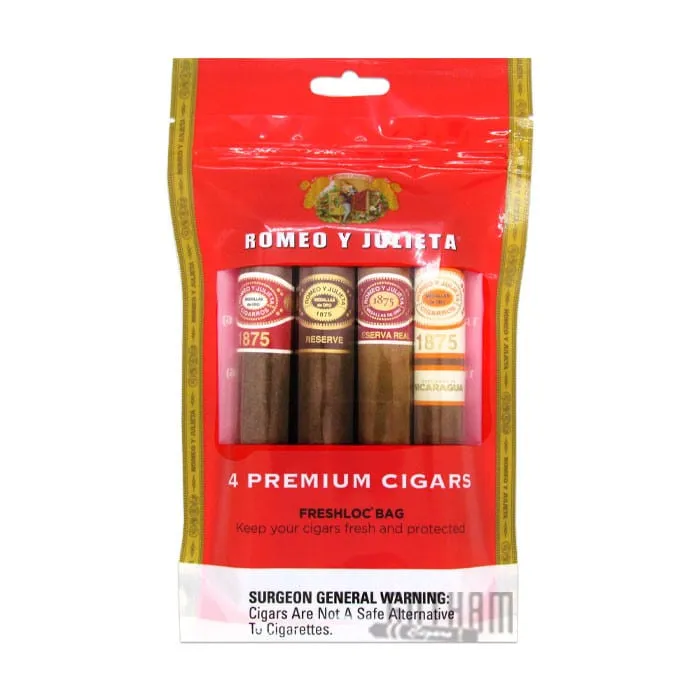
The Romeo y Julieta pack comes in a resealable humidified pouch, which the store says is good for storing them. That could help if you don’t have a humidor yet.
Cigar sampler, 21+
Romeo y Julieta Freshloc Sampler
Four cigars in a resealable humidified pouch: two 1875 Exhibicion No. 3 and two Reserva Real Toro.
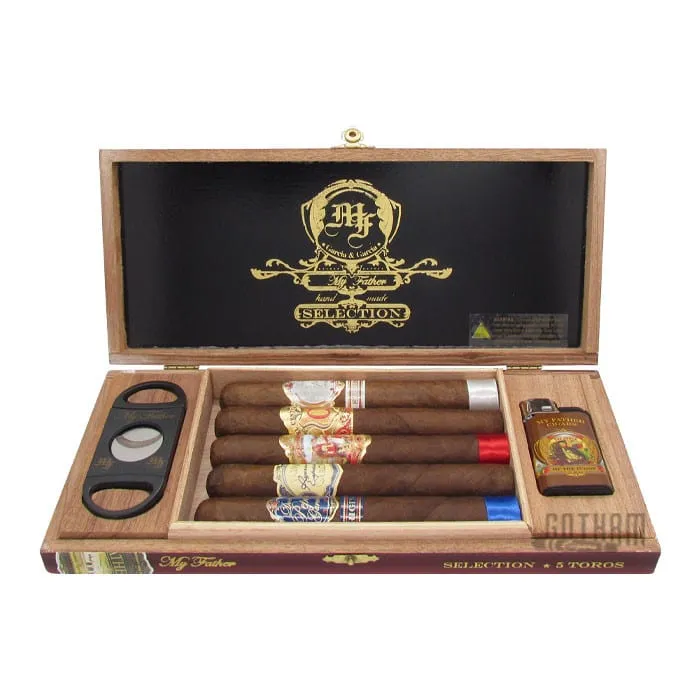
Check price at Gotham Cigars (paid link, opens in a new tab)The My Father box comes with a cutter and a lighter, so you wouldn’t need to buy those separately. The store says it suits a connoisseur or a novice, though that’s a seller’s description.
Cigar sampler, 21+
My Father Selection Sampler
Five toro-size cigars in a cedar box, with a branded guillotine cutter and a lighter.
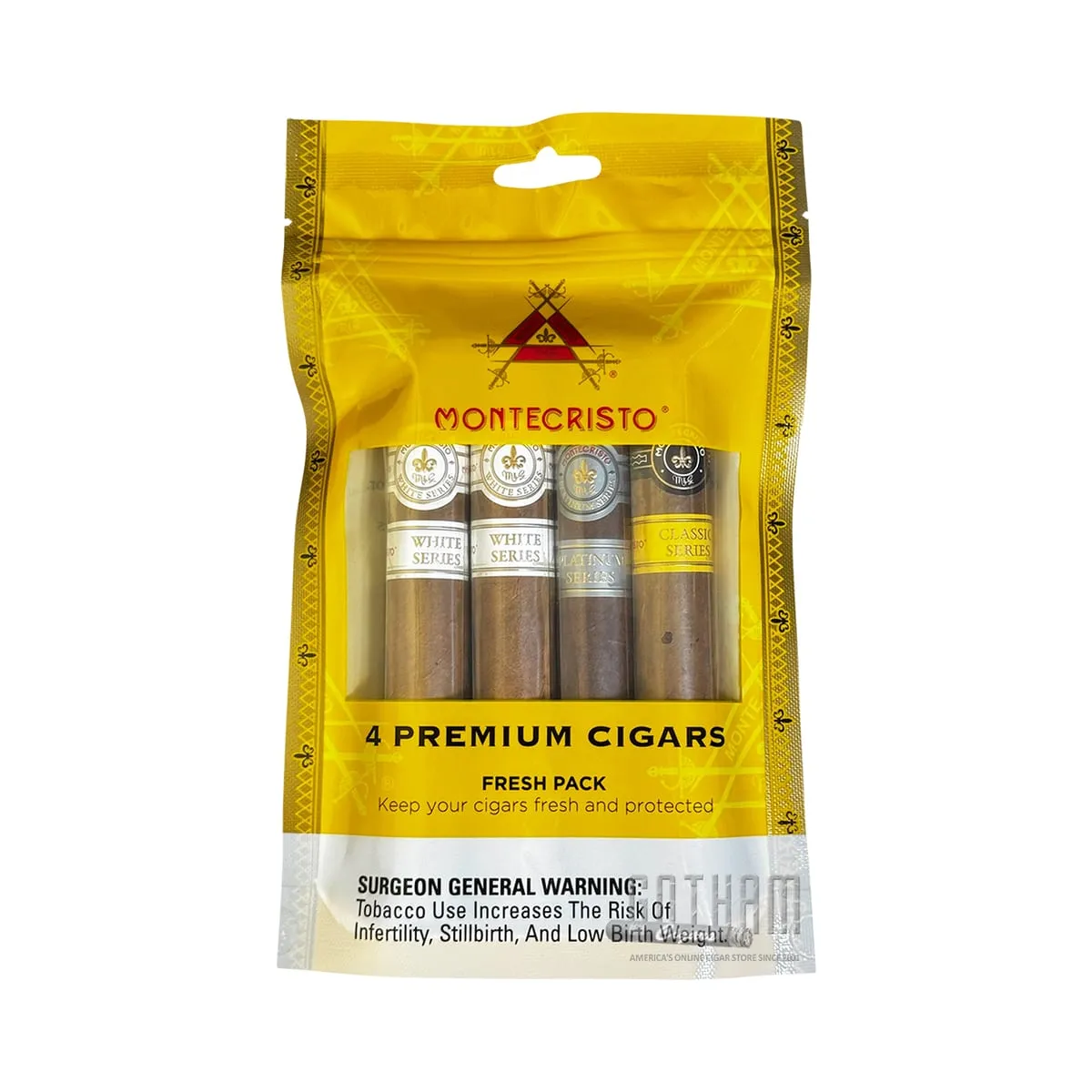
Check price at Gotham Cigars (paid link, opens in a new tab)The Montecristo pack includes two Whites, the line Mike’s Cigars names as a place to begin. It also holds a Platinum and a Classic, which I can’t say the same about.
Cigar sampler, 21+
Montecristo Toro Fresh Loc Sampler
Four 6-inch cigars in a fresh pack, which the store says are handmade in the Dominican Republic: two White, one Platinum and one Classic.
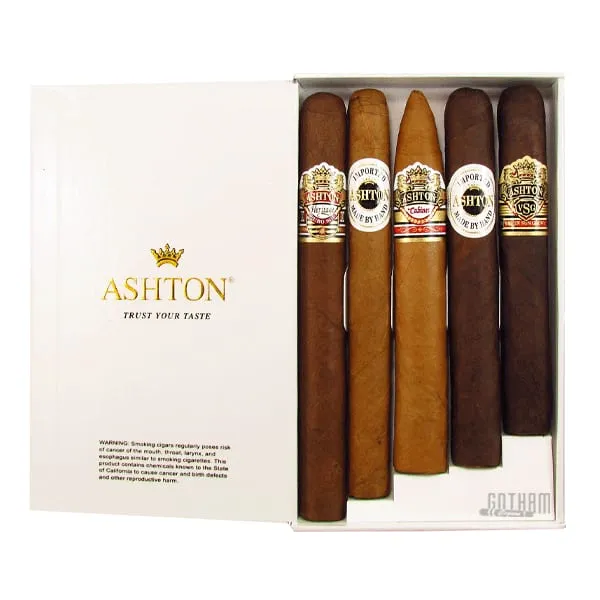
Check price at Gotham Cigars (paid link, opens in a new tab)The Ashton box is the one to look at for variety in size, since its five cigars come in five sizes, including a 5½ × 50 robusto.
Cigar sampler, 21+
Ashton 5 Cigar Assortment
Five cigars in five sizes, one each from the 898, Aged Maduro, Cabinet, Heritage and VSG lines.
Check price at Gotham Cigars (paid link, opens in a new tab)Gotham has its own rules for first orders and shipping. My gift guide covers what I found, and it’s worth checking before you buy.
Or ask in a shop
Michael Herklots, a tobacconist who was at Nat Sherman at the time, told Cigar Aficionado to work with a retailer willing to help, one who can remember what you’ve bought and make suggestions from there. Baffoe also credits a knowledgeable tobacconist. A shop is selling to you too, but a person can ask what you like and how much time you have, which a listing can’t.
If you’re holding the cigar, the sources give a few things to check:
- The wrapper. The 1993 primer says to avoid cracks and ripples, which it says can point to repeated swings between too wet and too dry.
- The feel. Mike’s Cigars suggests a slight, gentle squeeze. A good cigar should feel a little spongy, and a firmer spot may be a plug. Don’t press the head, which can crack it.
Keep notes on what you try
Herklots suggests keeping a journal and asking a few plain questions: Did it smoke hot or cool? Did it dry your mouth? Did it taste good or bad? Did it remind you of anything? Over time, he says, the answers start to show which kinds of cigars you like, and you can form preferences about origin, wrapper color and size.
What you’ll need besides the cigar
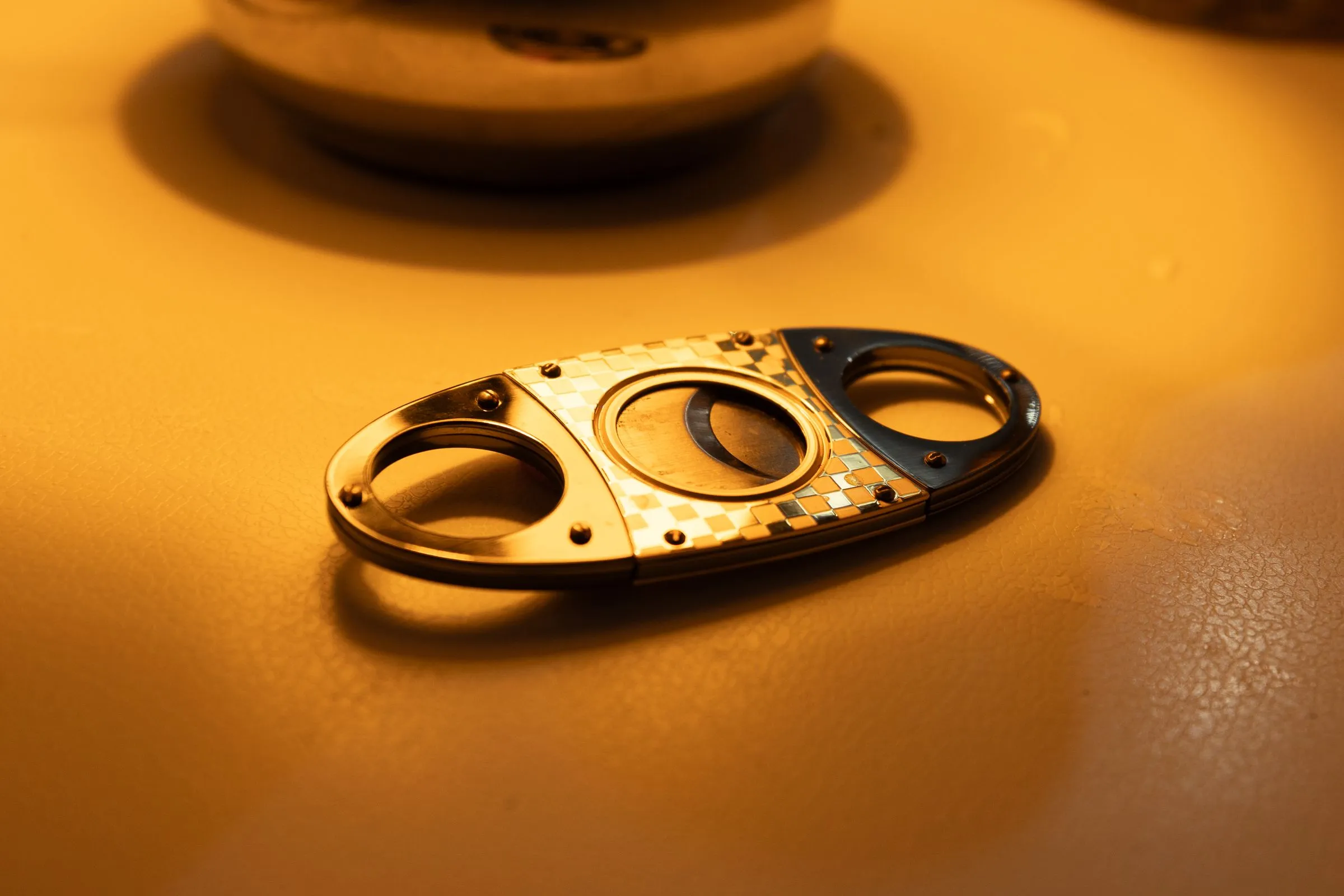
You’ll need something to cut it and something to light it. My guide to the basic tools goes through the options. If you’re only buying a cigar or two, you may not need to think about storage yet. If you end up keeping more, start with how to choose a first humidor.
Where that leaves a beginner
- Start with the stated strength, and lean mild if you don’t know what you like. Color alone won’t tell you.
- Pick a size for the time you really have, and go by the length and ring gauge, not the name.
- Don’t assume a higher price means you’ll like it more.
- Try a sampler or a few singles before you buy a box.
- If you have a good shop nearby, tell them it’s your first and ask.
- Write down what you liked, so the next choice is easier.
How this was put together
Researched guide. Compiled from the published sources linked in the text. No cigar was smoked, measured or tested for this piece. Several of the sources sell cigars or earn commissions on them, and the article says which. Details of the four linked samplers come from the listings at a store that pays this site a commission.
Related reading
-
Understanding cigar shapes and sizes
Parejo, figurado, ring gauge and the names in between. The measurements are simple. The names are not.
-
The basic tools for cutting and lighting a cigar
Guillotine, punch or V-cut. Torch, soft flame, match or spill. How each one works, and what the sources say are the trade-offs.