Cigars / Basics
Understanding cigar shapes and sizes
Parejo, figurado, ring gauge and the names in between. The measurements are simple. The names are not.
This page contains affiliate links. If you buy through one, Cut & Smoke may earn a commission at no extra cost to you. It does not change what is written here.
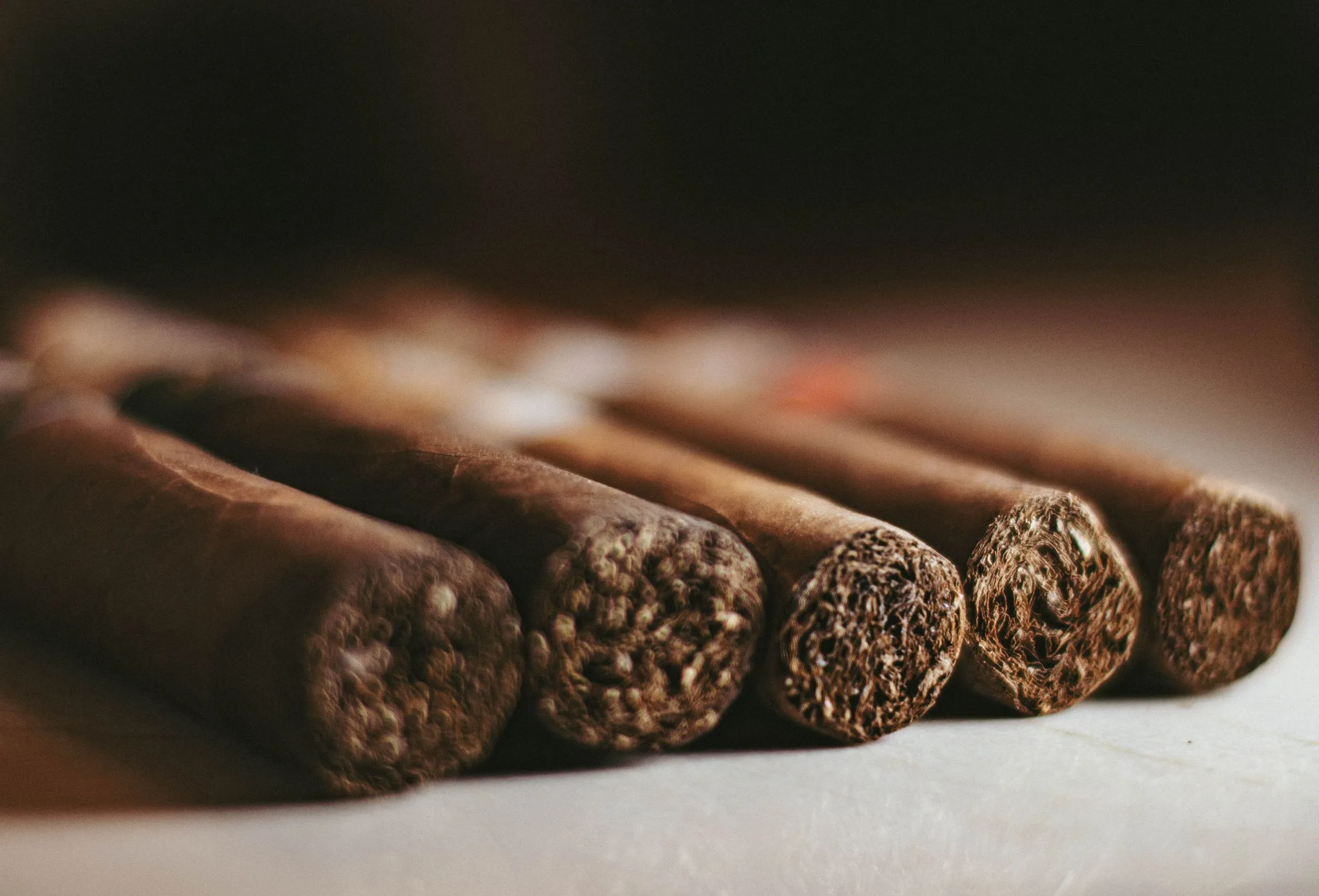
A cigar’s size is usually written as two numbers, often with a name attached: 5 × 50, robusto. The numbers are measurements. The name is a looser label. Cigar Aficionado warned in 1993 that one maker’s Churchill may be another’s double corona, and the sources since then have not made things much tidier.
I’ve noticed the different shapes myself when I’ve been to stores.
Two families: parejo and figurado
Cigar Aficionado’s 1993 article and Tobacconist University, which sells tobacconist training, both divide cigars into two groups. In the 1993 article’s terms, the foot is the end that gets lit and the head is the closed end at the mouth.
Parejo means straight-sided. Tobacconist University describes a perfect cylinder with an open foot and a rounded, capped head. Cigar Aficionado’s primer on shapes adds that parejos can be round or box-pressed, with the sides squared, and that most cigars are parejos.
Figurado covers the rest. The primer’s definition is any cigar that is not a straight-sided cylinder. Tobacconist University says figurados taper and bulge in specific ways.
How length and ring gauge work
In the United States, length is given in inches and diameter, called ring gauge, in 64ths of an inch. The primer’s example is a 42 ring gauge, which is 42/64 of an inch across. By the same arithmetic, a 64 would be one inch and a 50 a little over three-quarters of an inch. Cigar Aficionado’s 1993 article writes length first, so 6 by 42 means six inches long with a 42 ring gauge. Tobacconist University says Cuba and some European and Asian countries use the metric system.
Figurados complicate the number. Tobacconist University says a single ring gauge usually refers to the thickest part. When two are given, as in 32/54, the smaller is the thinnest part and the larger the thickest. The primer’s pyramid shows why that matters: about 40 at the head, widening to 52 to 54 at the foot.
Common parejo names
The table sets Cigar Aficionado’s primer beside Tobacconist University’s American market chart. Figures are length in inches by ring gauge. The primer’s page is labelled Nov/Dec 2000, but it mentions later developments, so it appears to have been revised.
| Name | Cigar Aficionado primer | Tobacconist University chart |
|---|---|---|
| Petit corona | About 4½ × 40–42 | 4½ × 42 |
| Corona | 5½–6 × 42–44 | 5¼ × 44 |
| Robusto | 4¾–5½ × 48–52 | 5 × 50 |
| Corona gorda or toro | 5⅝ × 46 traditionally; 6 × 50 also popular | Not listed under these names |
| Lonsdale | 6½ × 42 | 6½ × 42 |
| Churchill | 7 × 47 | 7 × 48 |
| Double corona | 7½–8½ × 49–52 | 7½ × 50 |
| Panetela | 5–7½ × 34–38 | 7 × 36 |
Corona. Both older Cigar Aficionado articles treat it as the benchmark for other sizes. The 1993 article gives the classic size as 6 × 42 and notes that many makers use 44. Tobacconist University’s 5¼ inches falls outside the primer’s range.
Churchill. Cigar Aficionado’s 2018 piece says 7 × 47 is the standard inside Cuban factories, and that its own tastings accept 6¾ to 7⅜ inches at a ring gauge of 47 or more. Tobacconist University’s 48 is an American market figure, which may explain the gap, though neither source says so. The size is named for Winston Churchill, and the same piece calls the timing of its origin disputed.
Toro. This name shows the problem best. Cigar Aficionado’s 2023 article defines it as 5½ to 6½ inches with a ring gauge of 46 to 59, and says about 69 percent of surveyed retailers named it their top seller. Halfwheel, a cigar news site with retail sponsors, says most people probably picture 6 × 50, that toros run from 5½ to 6½ inches at 48 to 54, and that no rule defines the name. Tobacconist University’s chart labels 6 × 50 a Robusto Extra.
Common figurado names
These come mainly from Cigar Aficionado’s primer, which notes that makers’ interpretations vary widely:
- Pyramid: a head tapered to a point and a cut foot, generally 6 to 7 inches.
- Belicoso: traditionally a short pyramid, but the primer says today’s versions are often coronas or corona gordas with tapered heads.
- Torpedo: the primer says it generally means a pyramid with a sharper point. The 1993 article describes a pointed head, a closed foot and a bulge in the middle, and Tobacconist University’s chart shows a taper at both ends with a pointed head.
- Perfecto: tapered at the foot and head, typically with a bulge in the middle. Lengths vary greatly.
- Culebra: three panetelas braided together and tied.
- Diadema: very large and tapered at both ends, sometimes 8 inches or more.
Why the names do not settle it
The sources agree on this point, even when their numbers differ. Cigar Aficionado’s 1993 article says generations of makers each decided independently which name went with which size, which left no simple logic. The primer says a shape can vary greatly in size from brand to brand. Tobacconist University says its general figures vary from one manufacturer to another.
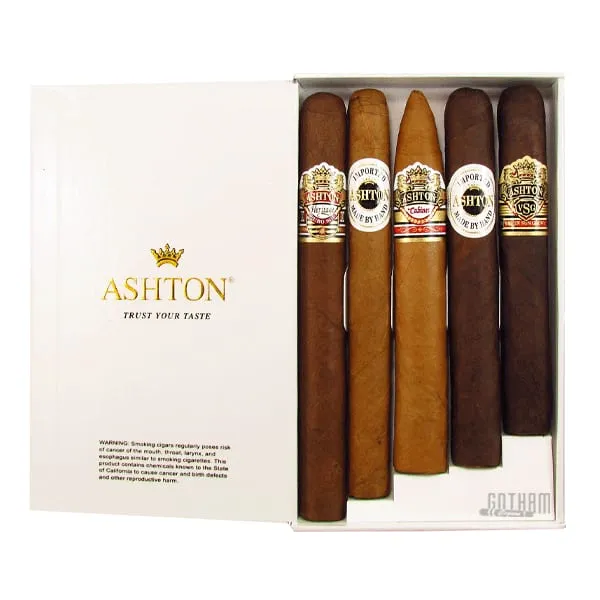
Two samplers from Gotham Cigars, which pays this site a commission, show the same thing. Ashton’s assortment lists a Churchill at 6 3/4 x 48 and a robusto at 5 1/2 x 50. Oliva’s Serie V sampler lists a Churchill at 7 x 52 and a robusto at 5 x 54. Each box also holds a figurado, listed as a pyramid in one and a torpedo in the other, so a sampler is one way to see several shapes side by side. I haven’t tried either, and cigars are for adults 21 and over.
Cigar sampler, 21+
Ashton 5 Cigar Assortment
Five cigars in five sizes, one each from the 898, Aged Maduro, Cabinet, Heritage and VSG lines.
Check price at Gotham Cigars (paid link, opens in a new tab)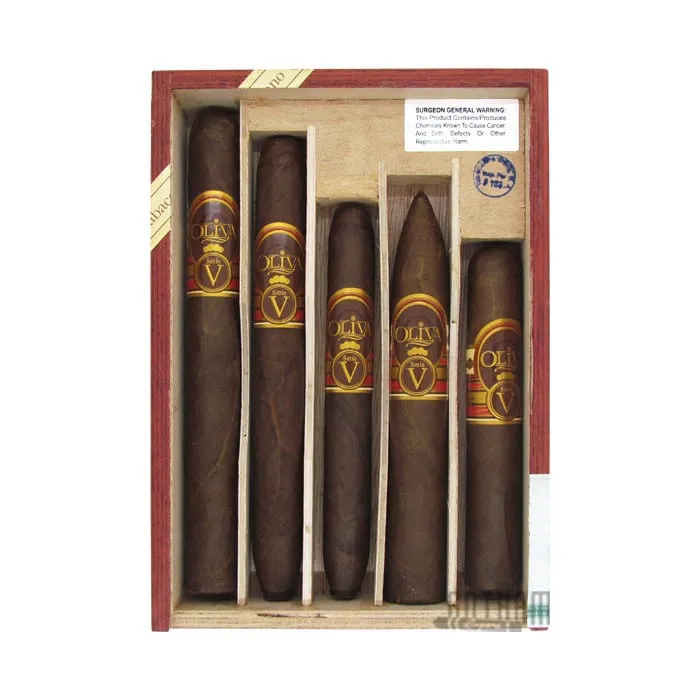
Cigar sampler, 21+
Oliva Serie V Sampler
Five cigars in a cedar box with a sliding top: a Churchill, two Diademas, a Robusto and a Torpedo.
Check price at Gotham Cigars (paid link, opens in a new tab)Cuba is the partial exception. The 1993 article says Cuban standards tend to be more uniform because one body oversees the industry, and halfwheel treats Habanos S.A. as the authority for Cuban cigars, citing 192 mm × 38 as a lancero. That authority does not travel. Halfwheel says most lanceros on the US market are 7 inches, not the Cuban 7 9/16, and that many are 40 or 42 in ring gauge.
Cuban cigars can also have two names, one for the factory (vitola de galera) and one for the marketplace (vitola de salida). Tobacconist University’s example is the Montecristo No. 4, a Marevas in the factory. Cigar Aficionado says the Churchill size is a Julieta No. 2 in the factory.
Where that leaves a beginner
- Read a name as a rough category, and the stated length and ring gauge as the actual description.
- With a figurado, check which part of the cigar a ring gauge refers to.
- Treat the table above as typical figures from two sources, not specifications.
- Do not read strength from size. The primer says the two are not correlated and credits strength to the tobacco.
Where to look
Cigar sampler, 21+
Ashton 5 Cigar Assortment
Five cigars in five sizes, one each from the 898, Aged Maduro, Cabinet, Heritage and VSG lines.
Check price at Gotham Cigars (paid link, opens in a new tab) Cigar sampler, 21+
Oliva Serie V Sampler
Five cigars in a cedar box with a sliding top: a Churchill, two Diademas, a Robusto and a Torpedo.
Check price at Gotham Cigars (paid link, opens in a new tab)How this was put together
Researched guide. Compiled from the published sources linked in the text. No cigar was measured or tested for this piece. The ring gauge conversions are simple arithmetic and are labelled in the text. Sizes for the two linked samplers come from the listings at a store that pays this site a commission, and the article says so. The sources disagree in places, and the article says where.
Related reading
-
How to choose your first cigar
Strength, size, wrapper and what to spend. The guides mostly agree on where to start, and many of them sell cigars.