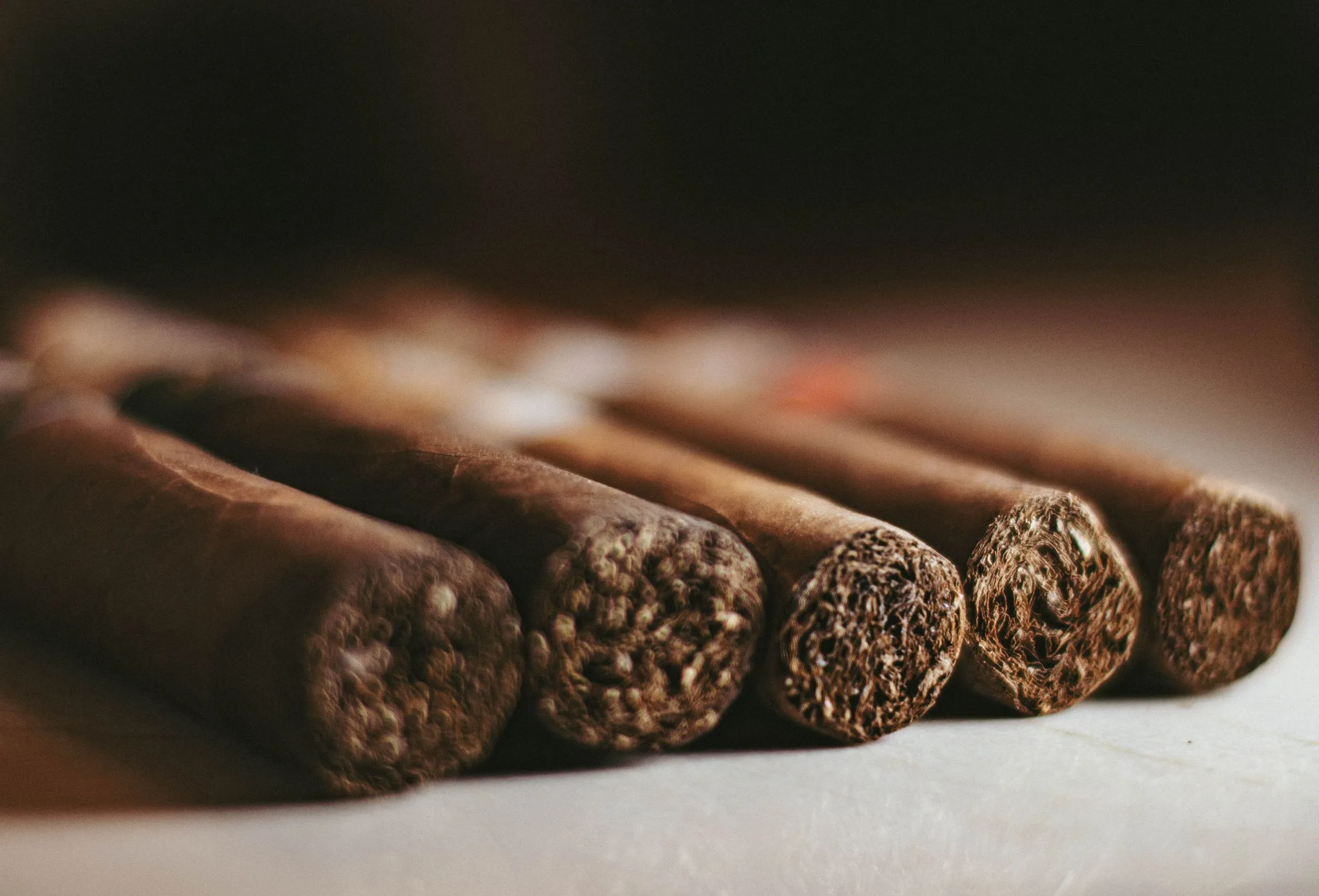
Gear / Cutters
The basic tools for cutting and lighting a cigar
Guillotine, punch or V-cut. Torch, soft flame, match or spill. How each one works, and what the sources say are the trade-offs.
This page contains affiliate links. If you buy through one, Cut & Smoke may earn a commission at no extra cost to you. It does not change what is written here.
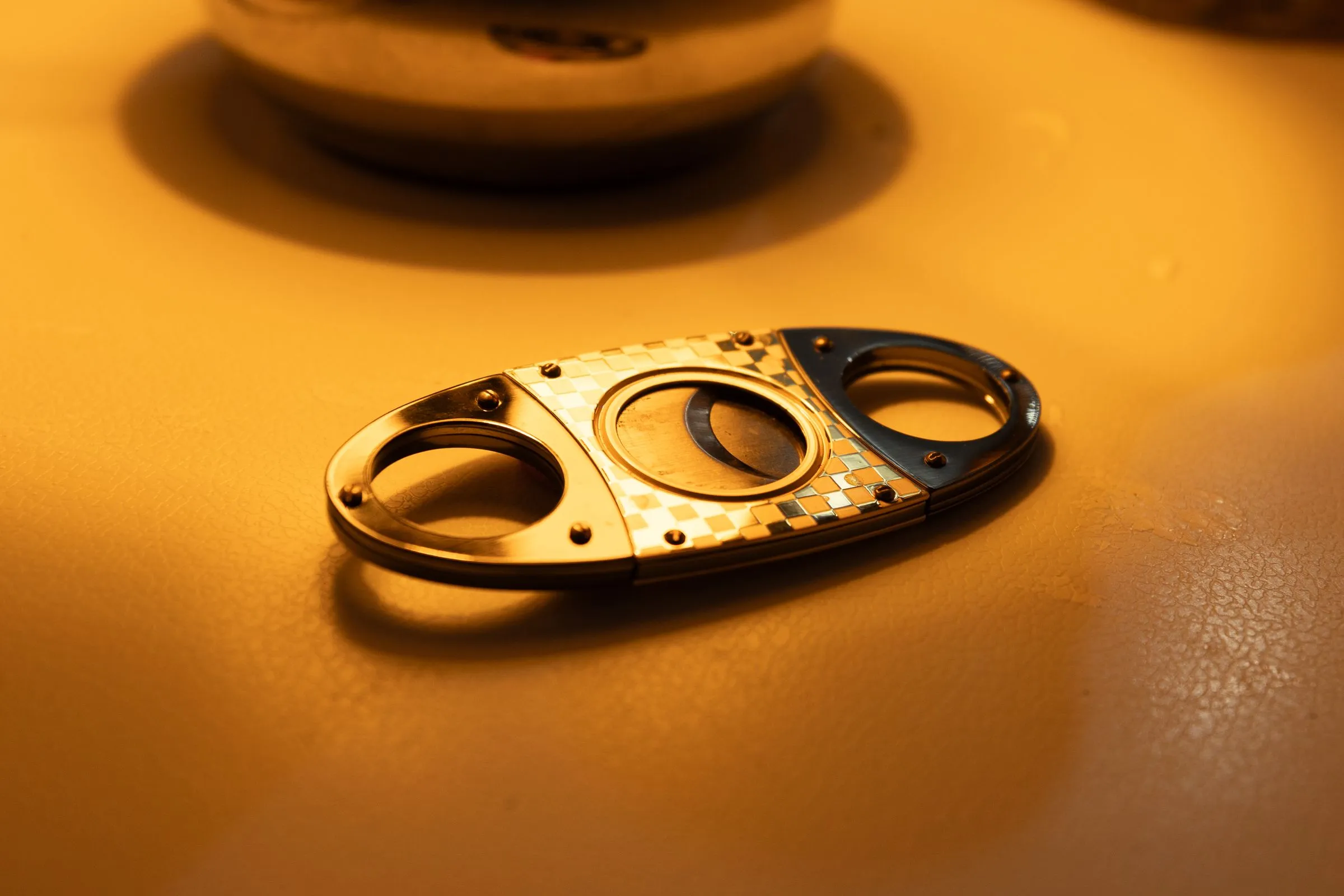
Two tools come before anything else: something to open the closed head of a cigar, and something to light the other end. Read the sources side by side and the same tool gets called both easy and hard, and two published torch temperatures do not obviously agree.
Mine happen to be one tool: a Vertigo Saber, a lighter with a V-cutter built in. I think it’s amazing for a 2-in-1. I’ve been very happy with it, and it’s very practical if you have limited space. That’s my experience with one tool, not a test, and the sources later in this piece are harder on V-cuts than I am.
The Lumina from 1st Class Humidors is the same idea, a torch lighter with a V-cutter in its body. I haven’t used it, so I can’t tell you how it compares. The other products in this piece come from the same store or from Gotham Cigars. Both pay this site a commission, and the products are described from their listings.
Lighter and V-cutter
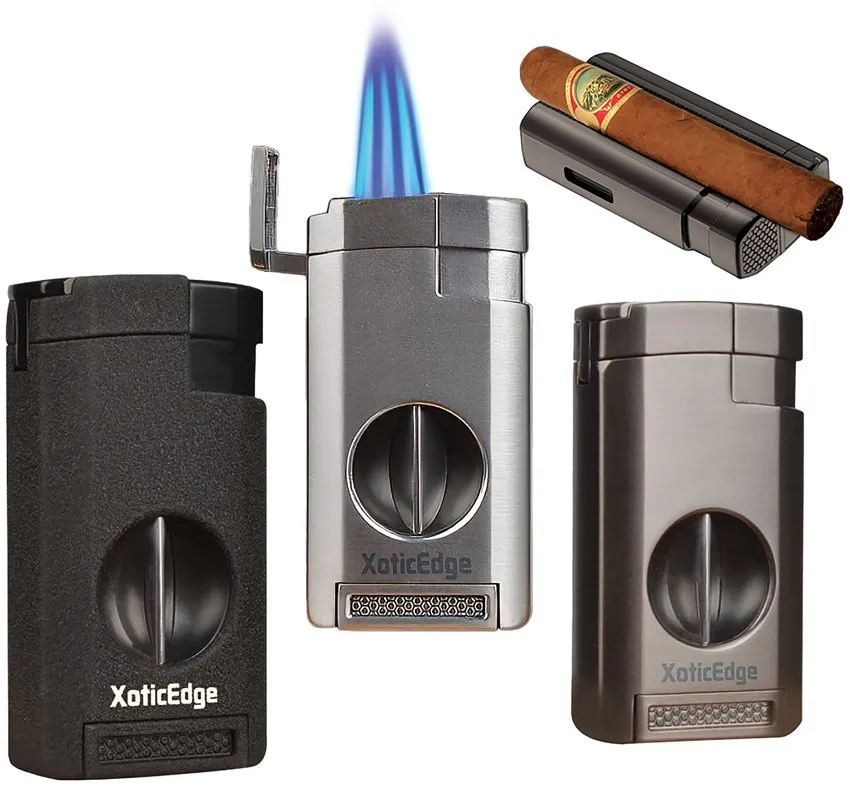
Lumina V-cut lighter
A triple torch with an adjustable flame, a built-in V-cutter and a cigar rest, in a gift box and a choice of finishes.
Check price at 1st Class Humidors (paid link, opens in a new tab)What a cut has to do
Cigar Aficionado’s 2001 guide sets the goal as an ample opening that does not damage the cigar’s construction. Cut too little and the cigar will not draw. Cut too much and it can fall apart. Its rule of thumb is about 1/16 inch from the head or, without a ruler, at the shoulder, where the cap straightens out. Tobacconist University (TU), which sells tobacconist training, puts it differently. It says a good cut leaves most of the shoulder intact, and that cutting off the whole head probably will not improve the draw but can make the cigar unravel.
The cutters at a glance
| Type | How it works | Trade-offs the sources name |
|---|---|---|
| Single-blade guillotine | One blade in a frame with a hole for the head. A straight cut. | Can pinch the cigar without one swift stroke. The blade compartment can clog. |
| Double-blade guillotine | Two blades approach from both sides. A straight cut. | Less risk of tearing or pinching. Smaller ones may not fit thick cigars. |
| Punch | A cylindrical blade removes a small circle of the cap. | Consistent, but tends to dull. Can gouge if pressed too hard. |
| V-cut | A blade takes a wedge out of the head. | An easy draw that can be too easy. Goes deep into the filler. |
| Scissors | Open jaws close across the head. | Very clean cuts and a wide opening. Full-sized pairs are not portable or cheap. |
| Piercer | A pointed tool pierces the cap. | A small opening that can draw unevenly or collect residue. |
Guillotines
TU calls the guillotine the most common cutter today and says a sharp blade is vital to avoid pinching or tearing the wrapper. Cigar Aficionado’s 2001 guide warns that a single blade can pinch the cigar unless it cuts in one swift stroke, and that its compartment can clog with tobacco.
Both see an advantage in two blades, because the cut comes from both sides at once. TU adds that double guillotines are not self-sharpening but stay sharp longer because each blade does half the work. Cigar Aficionado’s 2011 piece says smaller guillotines cannot always take today’s thicker cigars.
The Heavy Body is a double-blade cutter listed for up to a 56 ring gauge, so check that against the thickest cigar you smoke.
Cutter
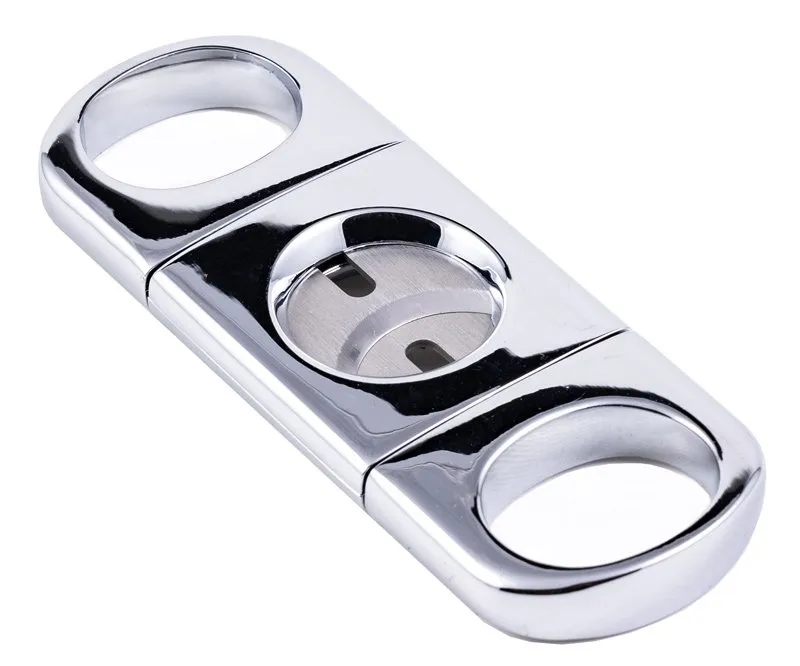
Heavy Body cutter
Double stainless blades for up to a 56 ring gauge, in a gift box.
Check price at 1st Class Humidors (paid link, opens in a new tab)Gotham Cigars sells two cheaper pocket guillotines. The Chopper has two blades, and its listing says it takes any ring gauge, which is worth checking against your thickest cigar. The Single Blade is the type those warnings are about, so it needs that one swift stroke.
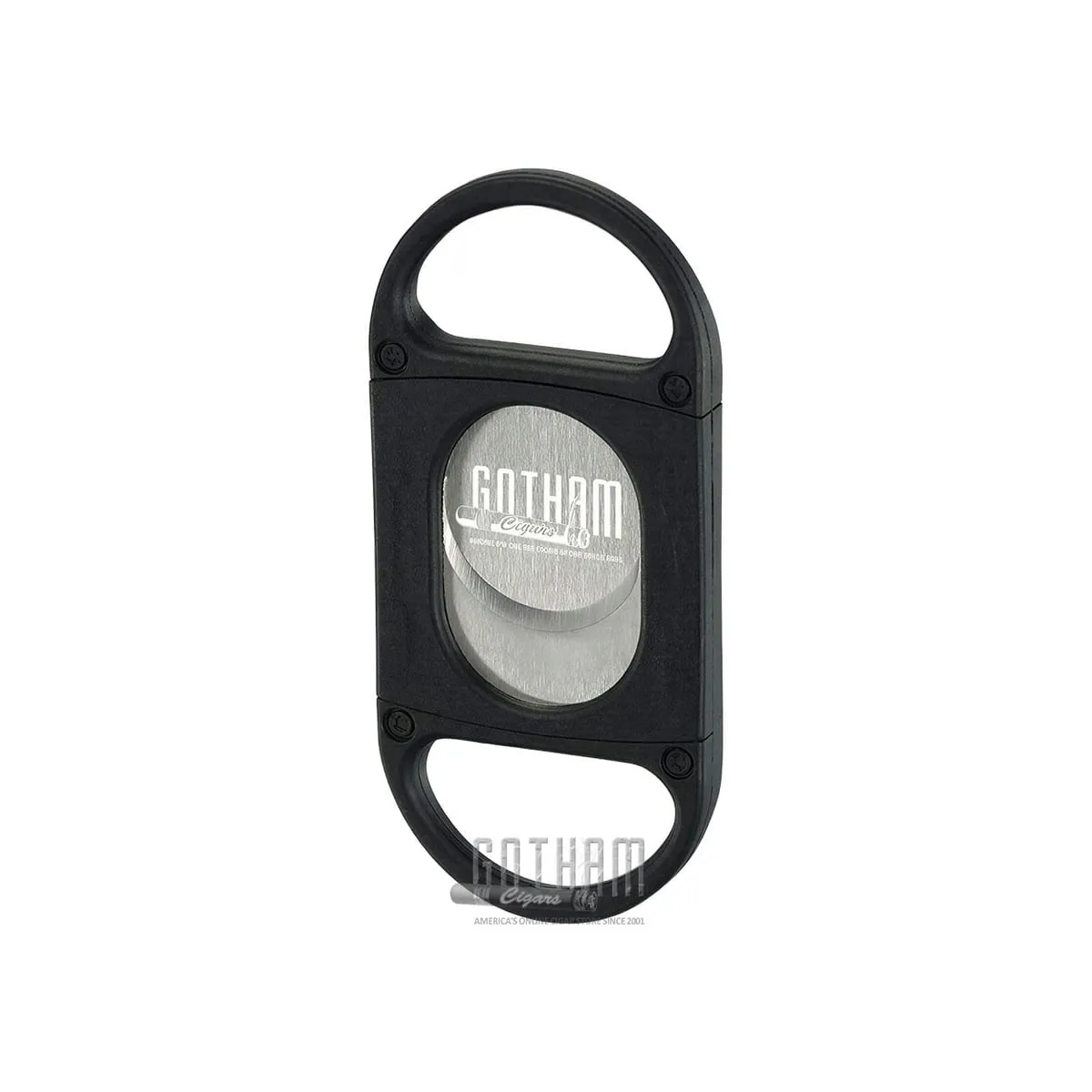
Double guillotine cutter
Gotham Chopper
Two stainless steel blades in a pocket body. The listing says it takes any ring gauge.
Check price at Gotham Cigars (paid link, opens in a new tab)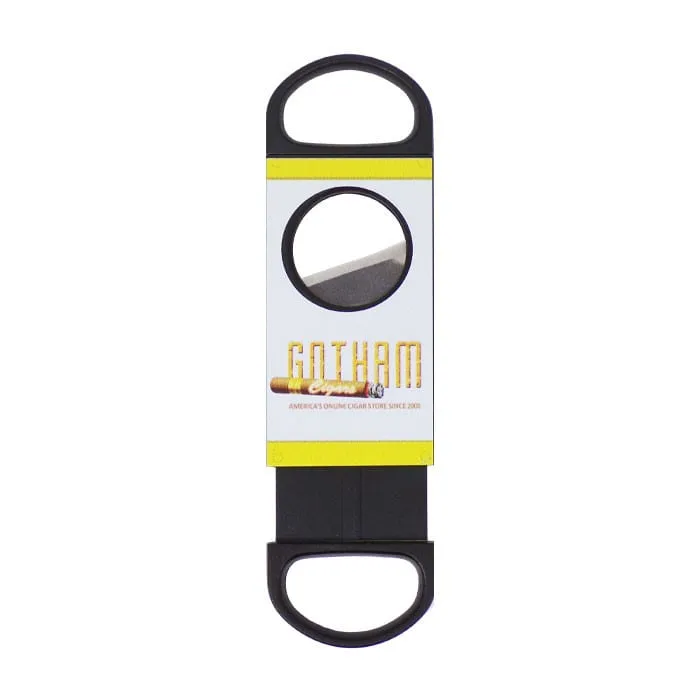
Single guillotine cutter
Gotham Cigars Single Blade Cutter
A small, lightweight pocket cutter with one blade. The listing doesn’t state a ring gauge limit.
Check price at Gotham Cigars (paid link, opens in a new tab)Punches
Cigar Aficionado’s 2009 piece says a punch takes a gentle twist and press and is easy to master, but that punches tend to dull and that pressing too hard gouges the cigar. Its 2011 piece says a punch only works on a parejo, or straight-sided cigar. TU calls consistency the punch’s greatest asset, barring user error.
The Spartan has two punch sizes in one tool, along with a draw tool and a twin nubber.
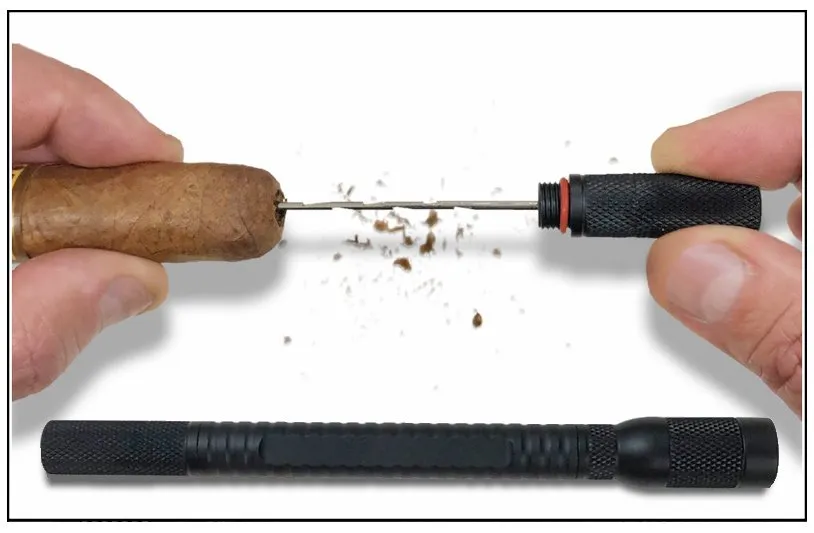
Punch and draw tool
Spartan 4-in-1 cigar tool
A draw tool, a twin nubber, an 8mm punch and an 11mm punch in one black tool.
Check price at 1st Class Humidors (paid link, opens in a new tab)V-cuts
Cigar Aficionado’s 2001 guide treats the wedge as a popular alternative with two drawbacks: the smoke can burn hot, and chewing the cigar can collapse the wedge and close the draw.
TU is harsher. It calls the cut unnecessarily invasive and a threat to the head, and says the blade must be extremely sharp. It says the cut works best on very slim cigars, such as panatelas and lonsdales.
If you want to try a V-cut anyway, the Vivid is listed for up to a 60 ring gauge, though TU’s advice points to much slimmer cigars.
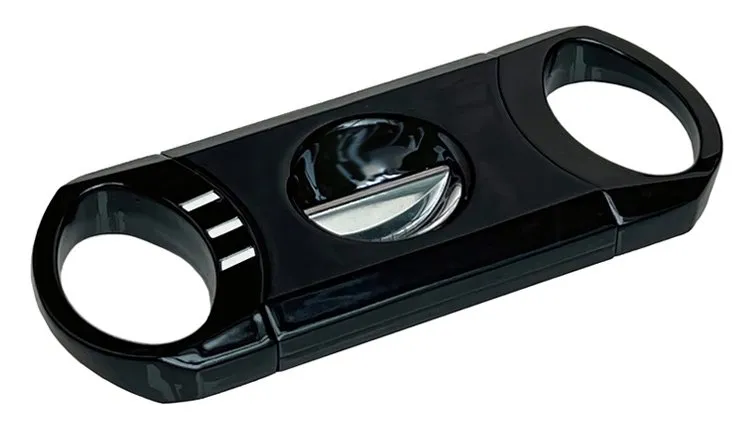
V-cutter
Vivid V-cutter
A metal V-cutter for up to a 60 ring gauge, with a cigar rest on the back, in a gift box.
Check price at 1st Class Humidors (paid link, opens in a new tab)Scissors and piercers
TU describes piercers as rare and says residue can collect at the small opening and affect the flavor. Cigar Aficionado warns that piercing too deep can form a tunnel that burns hot.
Lighting, whatever the tool
The basic advice is consistent: keep the cigar out of the flame and rotate it. Cigar Aficionado’s 2017 piece says to hold it about a quarter inch above any lighter’s flame. TU’s lighting FAQ gives ⅛ inch for a flame and ½ inch for a torch. Cigar Aficionado’s 2001 guide says direct contact carbonizes the tobacco and harms the flavor.
| Tool | How it works | Trade-offs the sources name |
|---|---|---|
| Torch lighter | A thin, needle-like flame that holds steady at any angle. | Very hot. Resists wind, but needs more maintenance. |
| Soft flame butane lighter | A lower-temperature yellow flame. | Slower, and difficult in wind. |
| Wooden matches | A soft flame, found almost anywhere. | The head must burn off first. Large cigars can take several. |
| Cedar spill | A thin strip of cedar, lit from another flame. | Aromatic and cheap, but not portable, and it makes ash. |
Torches. Cigar Aficionado’s 1993 piece describes “gas turbo” lighters with hot blue flames that resist blowing out, and says they need more maintenance. These appear to be what is now called a torch. The US Transportation Security Administration lists torch lighters as not allowed in carry-on or checked bags, on a page last updated in October 2024, so check the current rules before you travel.
The Spark Viking from Gotham Cigars is one cheap pocket example. A refillable lighter also needs butane, and the purity figure on this can is the listing’s claim, not something I’ve checked.
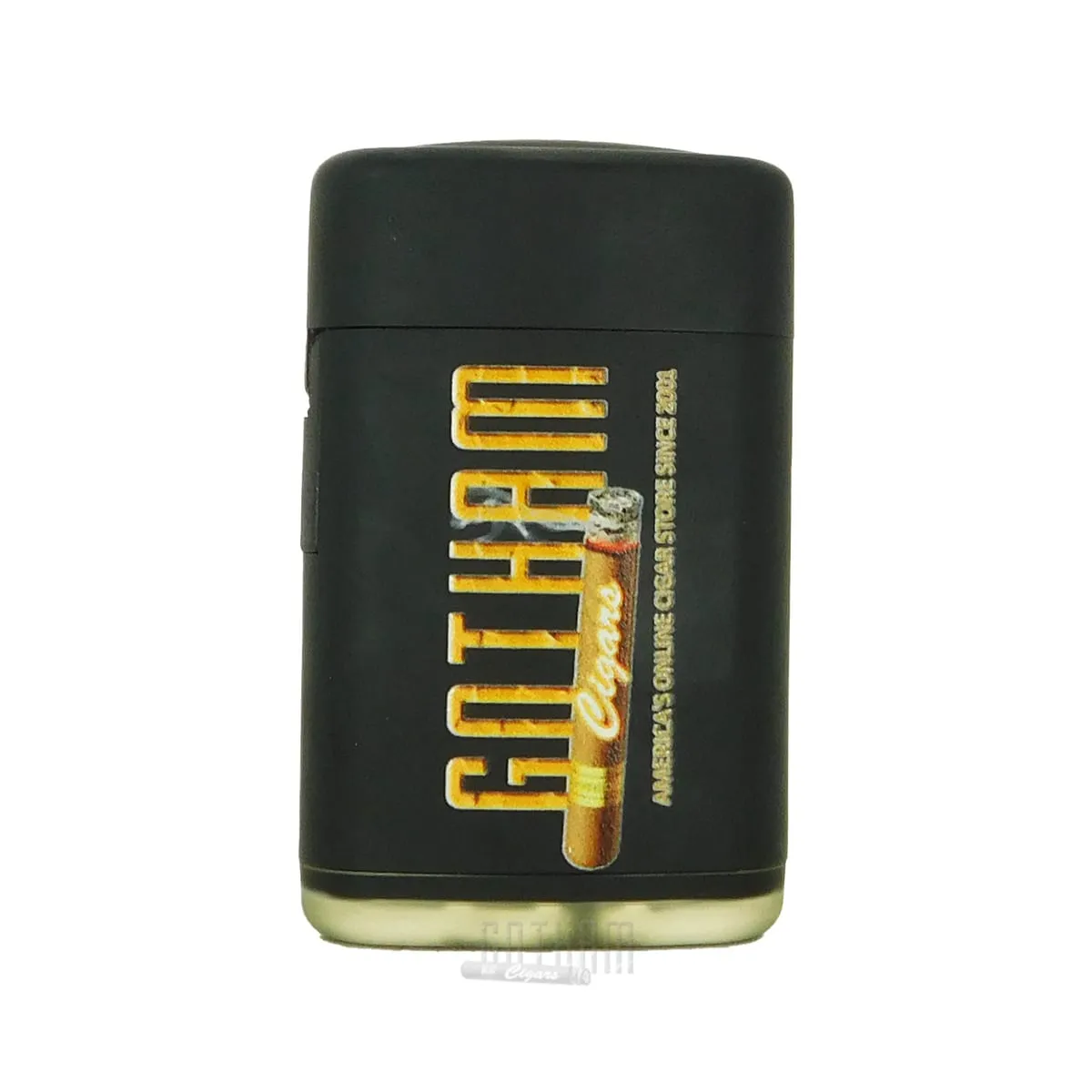
Torch lighter
Gotham Cigars Spark Viking Lighter
A pocket-size torch lighter with the store’s logo on it. The listing doesn’t say whether it ships filled.
Check price at Gotham Cigars (paid link, opens in a new tab)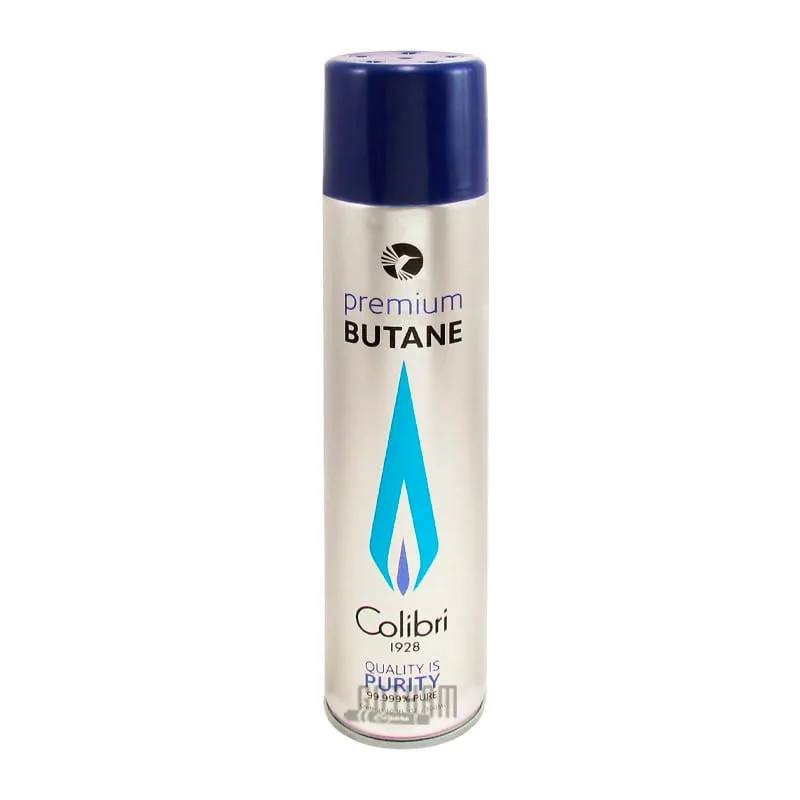
Lighter fuel
Colibri Butane 300ml
A 300 ml can for refillable butane lighters, with five nozzle adapters. The listing states 99.9994 percent purity.
Check price at Gotham Cigars (paid link, opens in a new tab)Soft flames. A contributor to Cigar Dojo, a review site with its own shop and cigars, says a torch can light a cigar properly, but a lower-temperature yellow flame usually does better. The same piece says most disposable lighters have no flame adjustment, and that many can become dangerous during a long toast because the mechanism overheats.
Matches. Cigar Aficionado’s 2001 guide prefers wooden matches with sulfurless heads, and its 1993 piece suggests striking short matches in pairs for a wider flame. The magazine’s 2017 piece says a match flame is cooler than any lighter, though it gives no figure.
Spills. Cigar Dojo says the thin cedar sheet in many cigar boxes can be cut into strips. Cigar Aficionado’s 1993 piece says a candle can light a spill but should never light the cigar directly, because the wax aroma can spoil the taste.
Cigar Aficionado also warns that oil-fueled lighters can add unwanted tastes, and Cigar Dojo advises against lighter fluid.
Cigar Aficionado itself points two ways. Its 2001 guide calls a wide-flame butane lighter the best route to a good light. Its 2017 piece says many people prefer a match or spill.
Where that leaves a beginner
- The cutting sources keep returning to a sharp blade, a decisive cut, and removing no more than the cigar needs.
- Cigar Aficionado and TU both describe double-blade guillotines as less likely to damage the wrapper. That is their judgment, not a test result.
- Whichever flame you use, keep the cigar out of it and turn it. Every lighting source here that gives technique says so.
- Treat claims about taste as opinions. This research found no controlled comparison of cuts or flames.
How this was put together
Researched guide. Compiled from the published sources linked in the text. Nothing was tested for this piece. It describes types of tool, and the author’s view of his own lighter is labelled as his experience. It also links eight products from two stores that pay this site a commission, described from their listings, and the article says so. The sources disagree in places, and the article says where.
Related reading
-
Understanding cigar shapes and sizes
Parejo, figurado, ring gauge and the names in between. The measurements are simple. The names are not.
-
Gifts for cigar lovers: a holiday guide for people who don’t smoke them
Cutters, lighters, ashtrays, starter sets and cigar samplers by budget, plus what to find out before you buy and when to order.