
Storage / Humidors
How to choose your first humidor
Capacity, seal, lining and what comes in the box. What the guides agree on, where they differ, and who is selling what.
This page contains affiliate links. If you buy through one, Cut & Smoke may earn a commission at no extra cost to you. It does not change what is written here.
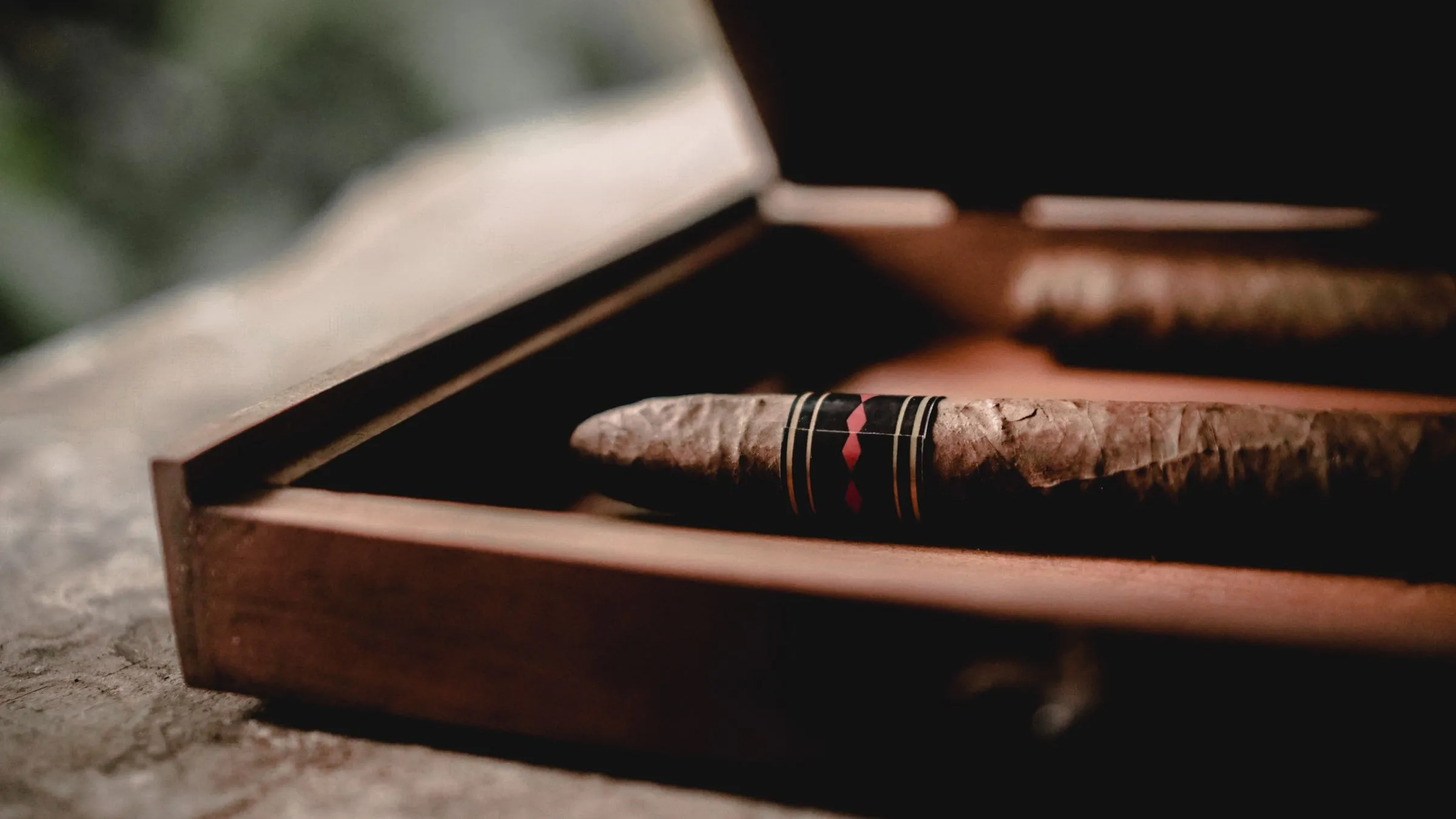
Most of what’s written about choosing a humidor comes from companies that sell them. This piece isn’t free of that either: it has paid links. So I’ve said who sells what, and where their advice doesn’t match.
My own is a small COOL KNIGHT with a glass top, a gift from my wife. I think it’s a great one for a beginner. That’s one owner’s opinion, not a test, and at least one guide below would have steered me away from it.
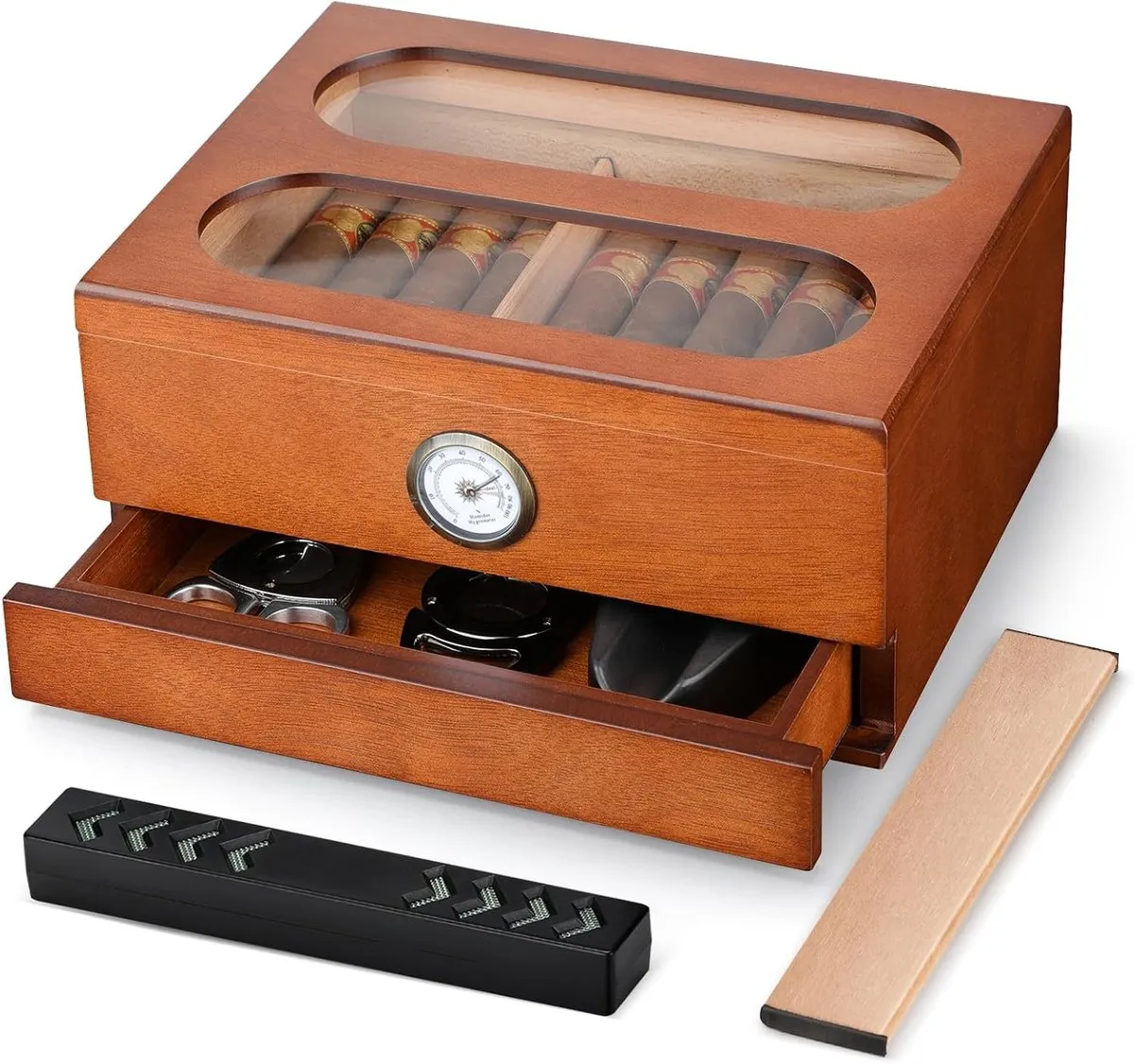
The one I own
COOL KNIGHT humidor
Spanish cedar, a glass top, a front hygrometer and accessory drawers. The listing says it holds 20 to 35 cigars.
Check price on Amazon (paid link, opens in a new tab)Start with how many cigars you keep
Nearly every source says to buy a little more room than you need. Cigar Aficionado’s 1998 storage guide says so, and it isn’t selling you the box. The sellers go further and put numbers on it:
- Cigar Advisor, from the retailer Famous Smoke Shop, suggests a 25-count box if you want to keep ten cigars, or a 50-count if you want to keep 25.
- Refined Traditions, a humidor retailer that pays this site a commission, suggests your current count plus 20 to 30 percent.
- Case Elegance, which sells humidors, suggests going one size up from what you think you need.
Bigger has its own costs, and two of the same sellers say so. Cigar Advisor warns that a box that’s too big is harder to keep humid, and it suggests a smaller one if you smoke a cigar or two a month and restock with a five-pack every few weeks. It also says you shouldn’t let a large box run empty, and that you can fill the extra space with bubble wrap. Case Elegance says a large box holding only a few cigars can leave them oversaturated.
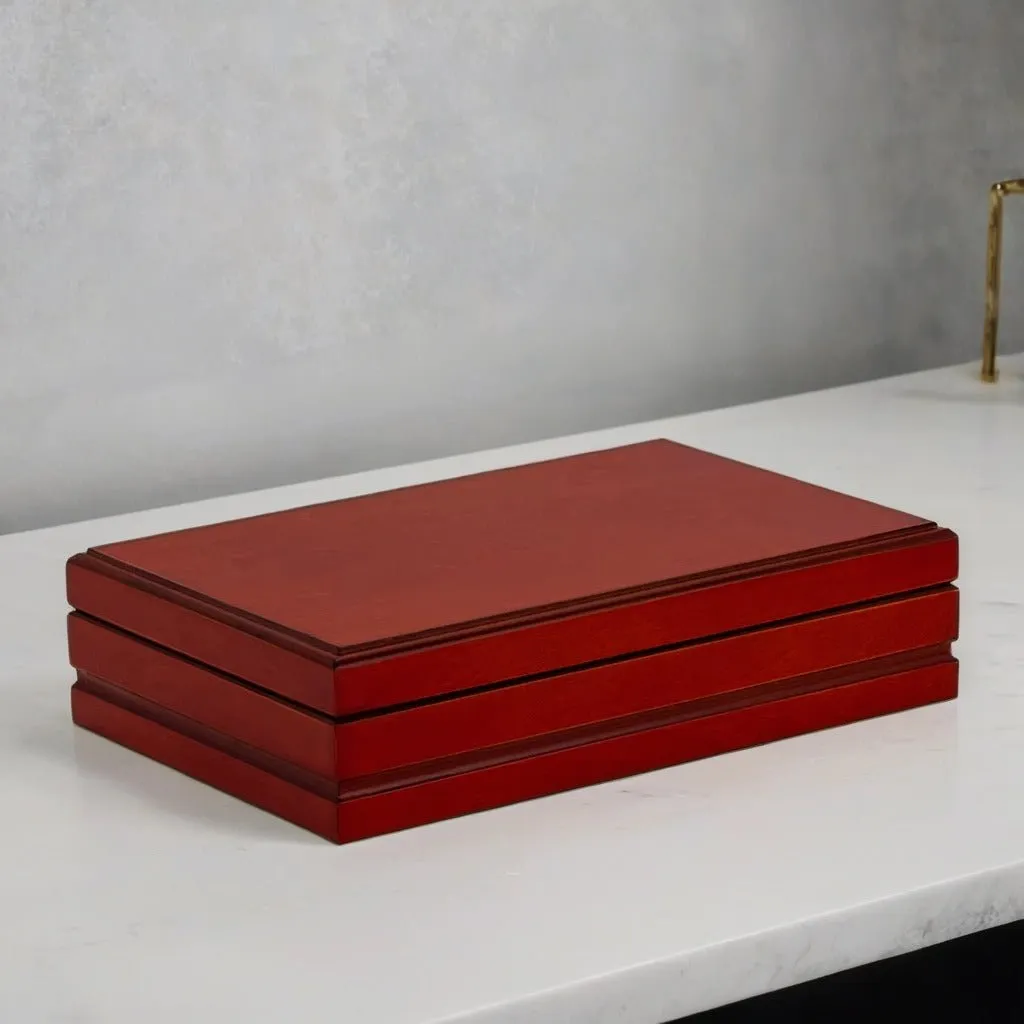
Browse by size
Small humidors
Compact desktop boxes and travel cases.
Shop small humidors at Refined Traditions (paid link, opens in a new tab)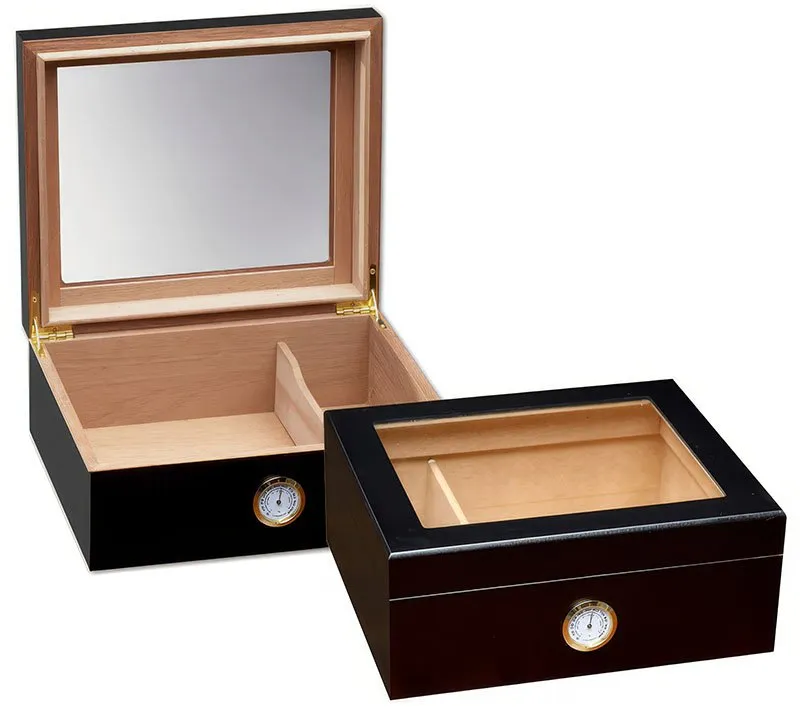
Browse by size
Small humidors
Desktop boxes and travel-sized cases for about 5 to 50 cigars.
Shop small humidors at 1st Class Humidors (paid link, opens in a new tab)Read the capacity number as a rough claim
This is where the guides disagree most. They don’t agree on which cigar the label counts, or how full a box should be.
| Source | What the count is based on | How full to keep it |
|---|---|---|
| Cigar Advisor, buying guide | Churchill, 7 × 48 | About 75% |
| Cigar Advisor, humidor roundup | Most likely corona | About 75–80% |
| Refined Traditions | Often petit corona | About 75% |
| Holt’s (retailer) | Not stated | About 75–80% |
| Case Elegance | Not stated | At least a third |
The two Cigar Advisor pieces disagree with each other on the first column. The buying guide does agree with the roundup that labels run high: it says a 100-count box probably holds about 80, and that a 25-count works better with about 15, or as few as 10 if they’re thick.
The one hands-on comparison I found points the same way. In a 2003 Cigar Aficionado test of 14 humidors, one box claiming 50 cigars felt tight with 20, and another had room for its advertised 100 only if they were petit coronas. Those models are more than 20 years old, so this shows the habit, not what today’s labels mean.
Check the seal
A good seal doesn’t mean an airtight one. Cigar Aficionado’s 1998 guide says a lid should let a tiny amount of air move in and out, and Cigar Advisor says wood expands and contracts too much for a box to be airtight. Refined Traditions does describe small boxes as having “air-tight seals”, so read that phrase loosely.
Two home checks come up:
- The whoosh test. Cigar Advisor says to lift the lid about three or four inches and let it drop. A whoosh of escaping air is what you want, and a thud or a bang suggests a poor seal. Cigar Aficionado’s 2003 test described much the same thing, contrasting a soft puff with a hard slam.
- The dollar bill test. Cigar Advisor’s roundup says to close the lid on a bill and pull. If it slides out easily, there’s a problem with the seal.
These are hobby checks, and none of these sources measured how well either one predicts humidity loss. You also can’t run them until the box is in front of you. If you buy online, I’d check the return terms first and try both soon after it arrives.
Glass tops need a second look
Cigar Advisor’s buying guide says it usually doesn’t recommend a glass top as a first humidor, because keeping a good seal takes extra steps. Its roundup explains that a glass top has a second seal, between the glass and the lid. If humidity keeps falling, it suggests testing that joint with clear tape, then running a bead of silicone around it if the tape helps.
Mine has a glass top, so that warning applies to me.
Look for Spanish cedar inside
The sources agree on Spanish cedar as the usual lining, though they describe it differently. Cigar Aficionado’s 1998 guide calls it fairly nonaromatic and warns against the strongly scented cedar used in closets. Cigar Advisor calls it very fragrant, and it says the wood isn’t a true cedar but a tropical hardwood related to mahogany. Both may be fair, since one is comparing it with closet cedar.
Cigar Advisor also credits it with absorbing and holding humidity and with protecting against tobacco beetles. It doesn’t cite evidence for that last claim, and the sources on beetles aren’t tidy.
Case Elegance adds that most humidors use cedar inside and a harder wood outside, because cedar is too soft for the exterior. Cigar Advisor calls acrylic humidors and jars a close runner-up to wood. Case Elegance says to make sure an acrylic box has some Spanish cedar inside.
Look at how it’s built
Cigar Aficionado’s 1998 guide is blunt: if the seams aren’t perfect or the corners aren’t square, skip it. It also warns that any visible warping in the rim or lid lets air in and moisture out, and it says a heavy lid is generally an advantage.
Its 2003 test shows what the faults looked like in practice: a thin inner cedar sheet that had started separating by the end of the test, loose fixtures with a missing screw, and hinges that looked too small for the box.
See what comes in the box
Cigar Advisor says you need a humidifier and a hygrometer, and that some humidors include them while others don’t. Check before you compare prices, because the roundup lists at least one box that needs a humidifier and hygrometer bought separately.
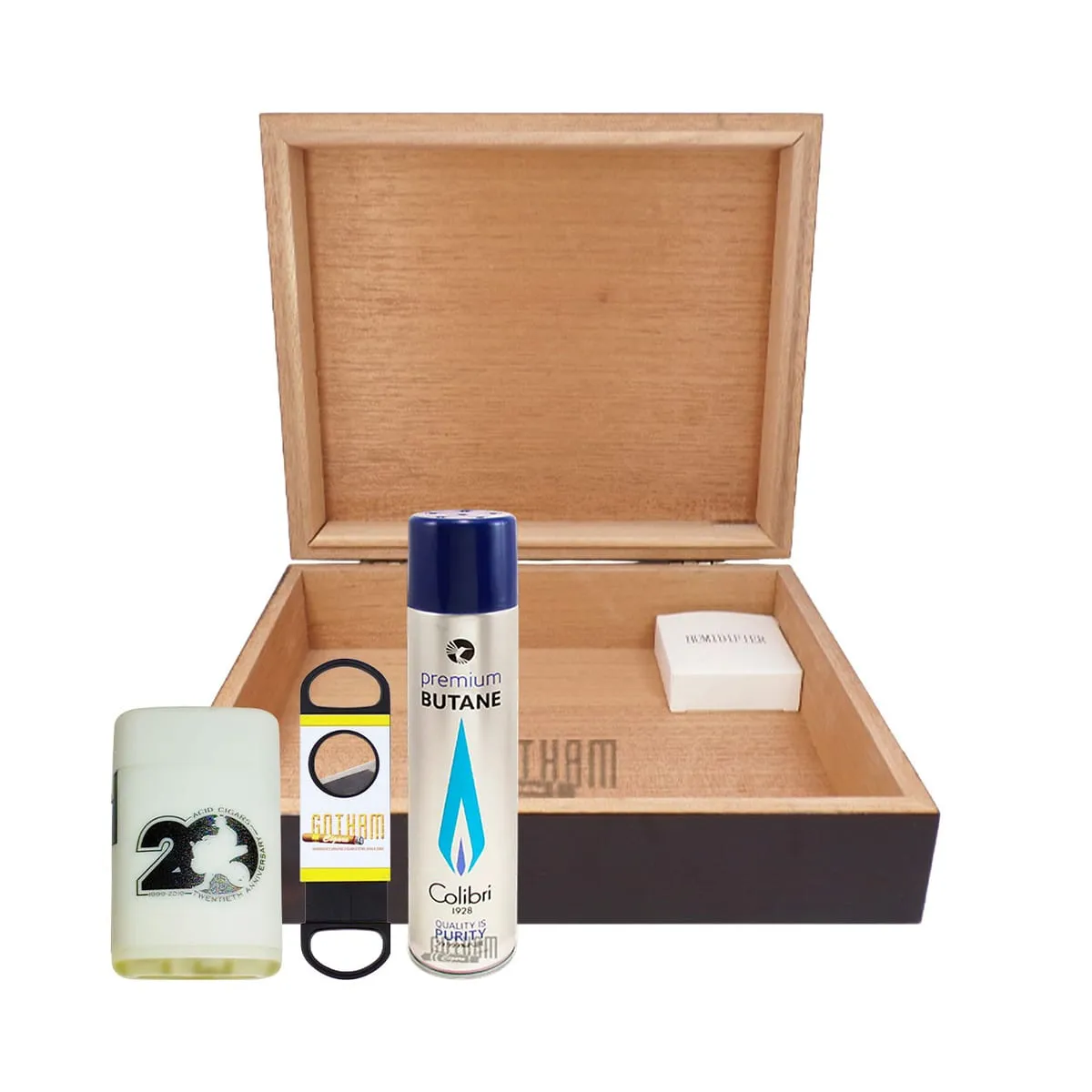
Two listings from Gotham Cigars, which pays this site a commission, show how much this varies. The Aficionado kit comes with a humidor, a cutter, a lighter and butane, but its parts list doesn’t name a humidifier or a hygrometer. The acrylic jar includes a humidifier and doesn’t mention a hygrometer. It’s also a jar, so the advice below about wooden boxes won’t all apply. I haven’t used either one.
Starter set, no cigars
Aficionado Starter Kit Lite
A Gotham Cigars humidor the store says holds about 20 to 40 cigars, a single-blade cutter, a spark lighter and a 300 ml can of Colibri butane.
Check price at Gotham Cigars (paid link, opens in a new tab)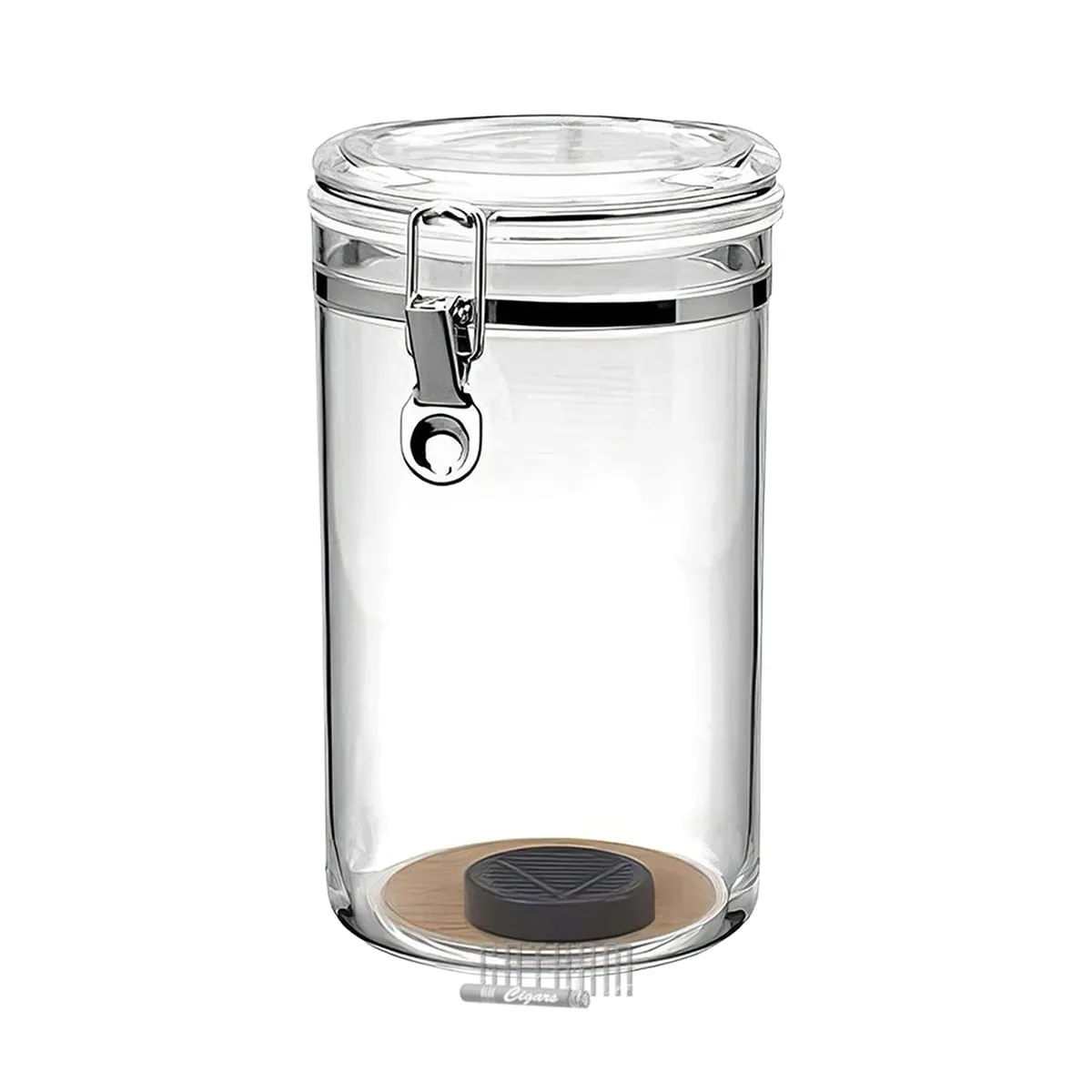
Jar humidor
Acrylic Cigar Jar Humidor
A clear jar the store says holds up to 25 cigars up to 8 inches long, with a gasket, a clasp, a removable humidifier and Spanish cedar at the base.
Check price at Gotham Cigars (paid link, opens in a new tab)An included part isn’t always a good one. In the 2003 test, one box’s analog hygrometer stayed at 50 percent for the whole six weeks. That’s why I’d check a hygrometer before trusting it, including the dial on my own box.
Plan for the upkeep too. Cigar Aficionado’s 1998 guide says regularly adding water matters more than the type of humidifier, and it recommends distilled water unless the maker says otherwise. Holt’s says humidity pouches last two to six months, depending on the size of the box and how many cigars it holds.
Allow time before the first cigar
A new box usually needs seasoning, because dry wood can pull moisture out of your cigars. The sources differ on how long it takes:
- Cigar Aficionado’s 1998 guide wipes the wood with distilled water, then leaves a damp sponge inside for two nights.
- Holt’s says to wipe it down, add a humidifier and wait a few days until it reads 70 percent.
- Refined Traditions says 3 to 5 days, using 84 percent Boveda packs or a distilled water wipe-down.
Cigar Aficionado also notes that some boxes have finished interiors that don’t need seasoning, so check the maker’s instructions first. My seasoning guide goes through the methods and where the sources disagree.
Where that leaves a beginner
- Count the cigars you actually keep, and buy somewhat more room than that, not many times more.
- Treat the capacity on the label as a claim, and plan on filling about three-quarters of it at most.
- Run the whoosh and dollar bill tests as soon as you can, while you can still return the box.
- If you want a glass top, know that it has a second seal to watch.
- Look for Spanish cedar inside, tight seams and square corners.
- Check whether a humidifier and hygrometer are included, and test the hygrometer either way.
- Keep the box out of direct sun and away from heat. Cigar Aficionado’s 1998 guide and my piece on humidity both come back to this.
Cigar Advisor also advises against using a travel case as your main storage, because it leaves little room to grow. Keep that in mind if you browse the small humidors linked here, since both pages mix travel cases in with desktop boxes.
Where to look
The one I own
COOL KNIGHT humidor
Spanish cedar, a glass top, a front hygrometer and accessory drawers. The listing says it holds 20 to 35 cigars.
Check price on Amazon (paid link, opens in a new tab) Browse by size
Small humidors
Compact desktop boxes and travel cases.
Shop small humidors at Refined Traditions (paid link, opens in a new tab) Browse by size
Small humidors
Desktop boxes and travel-sized cases for about 5 to 50 cigars.
Shop small humidors at 1st Class Humidors (paid link, opens in a new tab) Starter set, no cigars
Aficionado Starter Kit Lite
A Gotham Cigars humidor the store says holds about 20 to 40 cigars, a single-blade cutter, a spark lighter and a 300 ml can of Colibri butane.
Check price at Gotham Cigars (paid link, opens in a new tab) Jar humidor
Acrylic Cigar Jar Humidor
A clear jar the store says holds up to 25 cigars up to 8 inches long, with a gasket, a clasp, a removable humidifier and Spanish cedar at the base.
Check price at Gotham Cigars (paid link, opens in a new tab)How this was put together
Researched guide. Compiled from the published sources linked in the text. No humidor was measured, tested or compared for this piece, and the author’s view of the humidor he owns is labelled as opinion. Most of the sources sell humidors, one of them pays this site a commission, and the article says which. Products from stores that pay this site are described from their listings.
Related reading
-
Understanding your humidor’s humidity
The usual advice is 70 percent at 70°F. Here is what that number means, where it comes from and how settled it really is.
-
Understanding your hygrometer
The number on the dial is an estimate. Here is how far to trust it and how to check it at home.