Storage / Humidity
Understanding your humidor’s humidity
The usual advice is 70 percent at 70°F. Here is what that number means, where it comes from and how settled it really is.
This page contains affiliate links. If you buy through one, Cut & Smoke may earn a commission at no extra cost to you. It does not change what is written here.
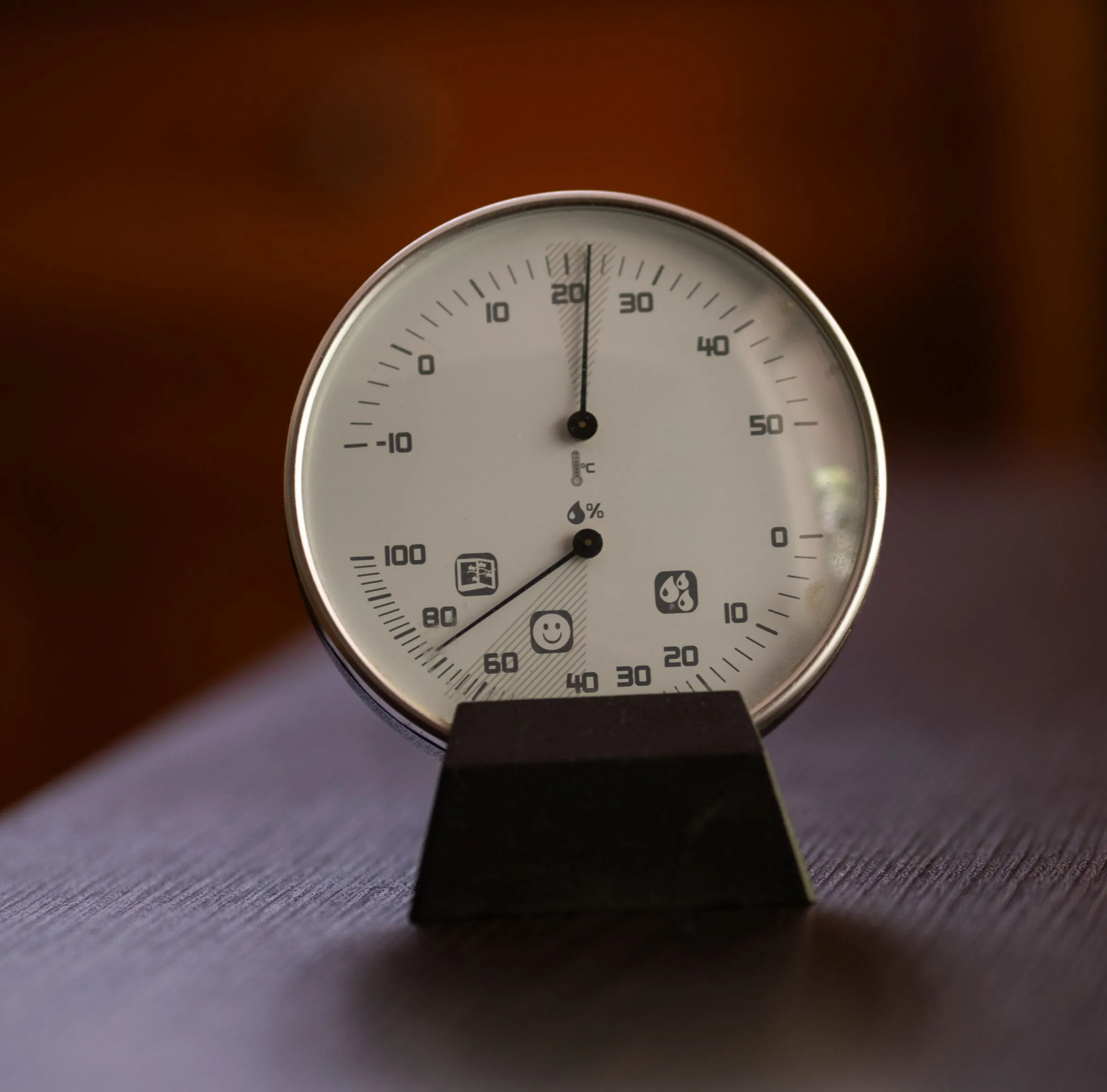
Ask how a humidor should be set and the usual answer is “70/70”: 70 percent relative humidity at 70°F. It is a reasonable place to start. It is also less settled than it sounds, and reading the sources side by side shows why.
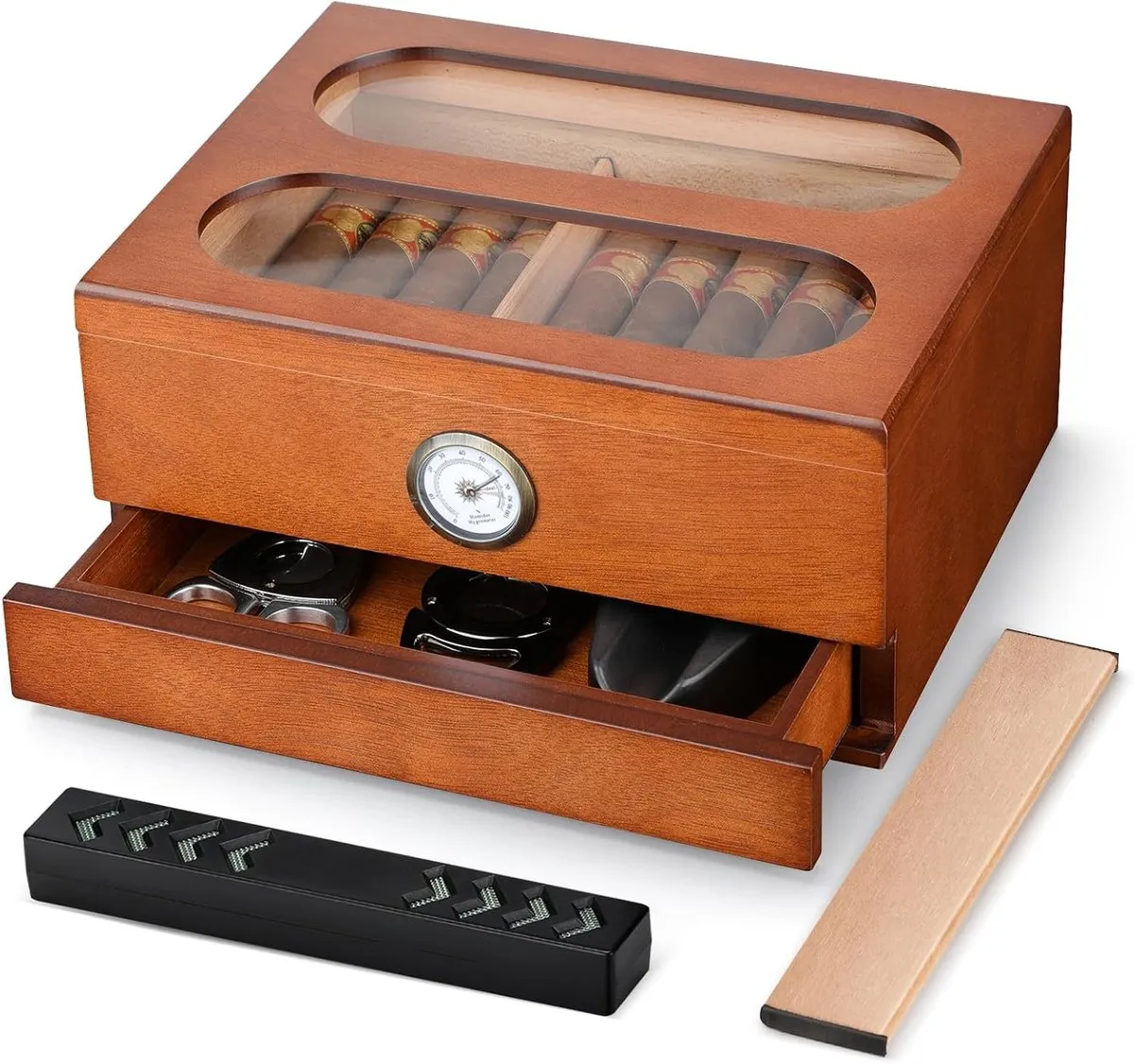
My own box is small: a COOL KNIGHT Spanish cedar humidor with a glass top, a hygrometer on the front, a humidifier and accessory drawers. The listing says it holds 20 to 35 cigars. It was a gift from my wife, and I think it’s a great one for a beginner. That’s one owner’s opinion, not a test.
The one I own
COOL KNIGHT humidor
Spanish cedar, a glass top, a front hygrometer and accessory drawers. The listing says it holds 20 to 35 cigars.
Check price on Amazon (paid link, opens in a new tab)What the percentage measures
Relative humidity compares the moisture in the air with the amount that would be there if the air were saturated. The National Weather Service points out that the saturation point depends on temperature, so the percentage alone does not tell you how much moisture is actually present.
That is why humidity and temperature belong together. Warm the same air and the percentage falls, even though no water has left the box.
What the sources recommend
Most guidance gathers around 70/70, but the details move, even within a single publication:
| Source | Humidity | Temperature |
|---|---|---|
| Cigar Aficionado, 1998 | 70–75% | 68–70°F |
| Cigar Aficionado, 2000 | 70% | 70°F |
| Cigar Aficionado, 2003 | 65–70% | Not stated |
| Cigar Aficionado, 2010 | About 70% | About 70°F |
| Holt’s (retailer) | About 70% | 70°F |
These are editorial recommendations, not a measured standard. The research for this piece did not turn up a university or standards body that sets a target for home cigar storage. Taken together, the sources span about 65 to 75 percent, with 70 the figure repeated most often.
Holt’s suggests refilling the humidifier when a box falls into the low 60s. Cigar Aficionado’s 2010 piece adds a suggestion to age cigars slightly cooler and drier than usual.
Some humidifiers are sold around a target number. XIKAR’s crystal jar, from Gotham Cigars, which pays this site a commission, is listed as regulating humidity to 70 percent in a box of up to 50 cigars. That’s the seller’s claim, and I haven’t used it. A hygrometer you’ve checked is how you’d find out.
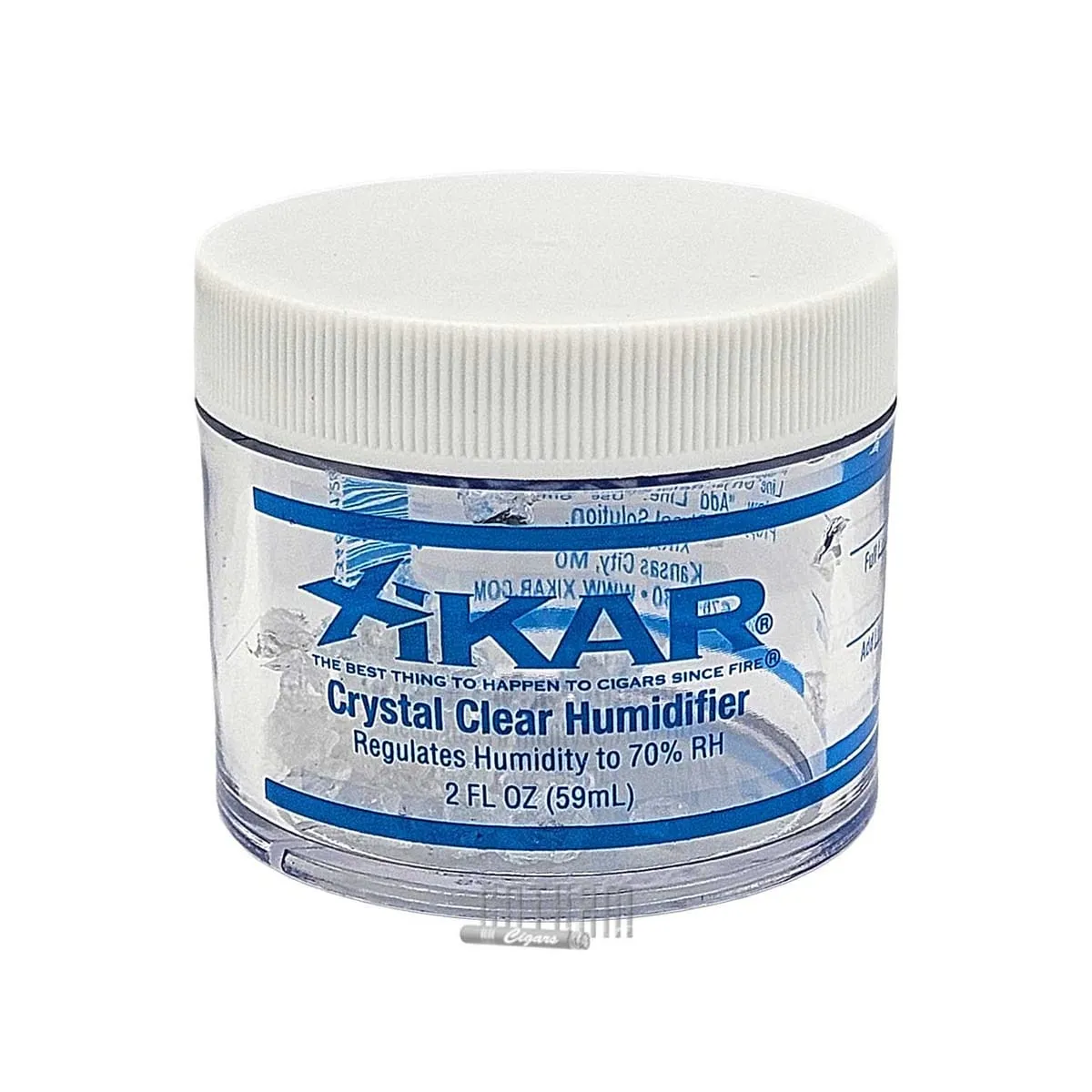
Humidifier
XIKAR Crystal Humidifier Jar
A 2 oz jar of polymer crystals for a humidor of up to 50 cigars. The listing says it regulates humidity to 70 percent.
Check price at Gotham Cigars (paid link, opens in a new tab)What can go wrong
Too dry. Cigar Aficionado’s 1998 guide says dried-out cigars are usually a write-off. Reconditioning them can take weeks in a good humidor and may not work. The same guide warns that a humidor which is itself dry can ruin the cigars placed in it, which is why new boxes are seasoned first.
Too wet. The same guide says cigars that turn moldy have to be thrown out, and that an airtight, moist container makes mold more likely. It also describes cigars splitting after time in very moist air, when the outside dries and shrinks ahead of a still-swollen center.
Too warm. This is where tobacco beetles come in, and where the numbers get less tidy.
The beetle numbers are not a clean line
Cigar Aficionado gives two thresholds. Its 2000 article says larvae hatch above 72°F and 72 percent humidity. Its 1998 guide says beetles sometimes appear when a humidor stays above 75°F for more than 24 hours.
Texas A&M’s entomology program describes the same insect more broadly. It lists best development at 70–80 percent humidity and 68–86°F, stopping only below 59°F or above 94°F. That page covers stored products in general, not humidors.
The practical advice is more consistent: keep the box out of direct sun and away from temperature extremes, and check whether the room swings while you are out.
Check the instrument before trusting the number
A target only means something if the reading is right. Cigar Aficionado’s 1998 guide calls analog hygrometers frequently inaccurate and says digital ones are usually reliable to within 2 percent. That is an old figure, and it is worth checking the stated accuracy of any specific model. Even so, at plus or minus 2 percent a reading of 70 could mean 68 or 72.
The common home check is the salt test, which relies on a well-established result. A 1954 National Bureau of Standards study measured the air above a saturated sodium chloride solution at between 74.7 and 75.6 percent relative humidity, from 32°F to 122°F. A sealed container holding a slushy salt-and-water mix should therefore give a reading near 75 percent.
That study used pure salt and distilled water under laboratory controls. A kitchen version with table salt is a rough check, not a laboratory calibration. Holt’s advises calibrating any new hygrometer.
Where that leaves a beginner
- Start near 70 percent, and treat the published span of 65 to 75 as disagreement between sources, not a safe zone anyone has proven.
- Use a hygrometer you have checked, and read temperature alongside humidity.
- Keep the box away from sun and heat sources.
- Expect some movement. Holt’s notes that conditions vary a little with the seasons, so a trend over days tells you more than one reading.
Where to look
The one I own
COOL KNIGHT humidor
Spanish cedar, a glass top, a front hygrometer and accessory drawers. The listing says it holds 20 to 35 cigars.
Check price on Amazon (paid link, opens in a new tab) Humidifier
XIKAR Crystal Humidifier Jar
A 2 oz jar of polymer crystals for a humidor of up to 50 cigars. The listing says it regulates humidity to 70 percent.
Check price at Gotham Cigars (paid link, opens in a new tab)How this was put together
Researched guide. Compiled from the published sources linked in the text. No humidor was measured or tested for this piece, and the author’s view of the humidor he owns is labelled as opinion. It links a humidifier described from its listing, from a store that pays this site a commission, and the article says so. The sources disagree in places, and the article says where.
Related reading
-
Understanding your hygrometer
The number on the dial is an estimate. Here is how far to trust it and how to check it at home.
-
How to choose your first humidor
Capacity, seal, lining and what comes in the box. What the guides agree on, where they differ, and who is selling what.